UpKeep vs Fiix: A Commercial Facilities Comparison for 2026

TL;DR
Choose between UpKeep and Fiix through a building-specific pilot, not a generic software ranking. Compare technician effort, asset history, vendor handoffs, integrations, and total operating cost; confirm plan-specific capabilities before signing.
A maintenance platform earns its place when a technician can finish a repair and leave a useful record. UpKeep vs Fiix should therefore start with commercial building workflows: rooftop HVAC inspections, tenant requests, contractor dispatch, and portfolio reporting. Leansite also deserves consideration for a building-focused evaluation.
CMMS: A computerized maintenance management system organizes maintenance work, asset records, and scheduled tasks. For facilities teams, its value depends on how well those records support daily decisions, not simply how many features appear in a sales presentation.
Table of Contents
UpKeep vs Fiix: What Should Facilities Teams Compare?
UpKeep and Fiix should be compared against the same commercial maintenance scenarios, with evidence collected for each proposed subscription. The supplied research does not establish current plan-level differences in mobile functionality, integrations, or pricing, so a definitive feature winner would be premature.
The useful comparison separates software capability from operating fit. A function may exist but require configuration, another subscription tier, or administrative work that changes its practical value.
Side-by-Side Building Workflow Scorecard
A shared scorecard makes demonstrations comparable without treating unverified capabilities as confirmed features.
| Building workflow | Evidence required from UpKeep | Evidence required from Fiix |
|---|---|---|
| Mobile repair completion | Technician completes a task with photos and notes | Same task, same device and connection conditions |
| HVAC asset history | Previous repairs, parts, and linked documents retrieved | Same records retrieved from equivalent asset setup |
| Vendor coordination | Contractor receives scope and returns completion evidence | Same handoff, including access permissions |
| Portfolio oversight | Site-level backlog and spend report produced | Equivalent report with matching definitions |
| Integration management | Required data exchange demonstrated | Same exchange, including error handling |
A fair comparison uses identical work, users, and success criteria. A polished demonstration alone doesn't establish operational fit.
Video Orientation Before Product Trials
A multi-product overview can help establish terminology before a hands-on comparison, but subscription details still need direct confirmation.
How Should Teams Test Mobile Work and Asset Records?
- Test mobile work with the same repair request in both systems.
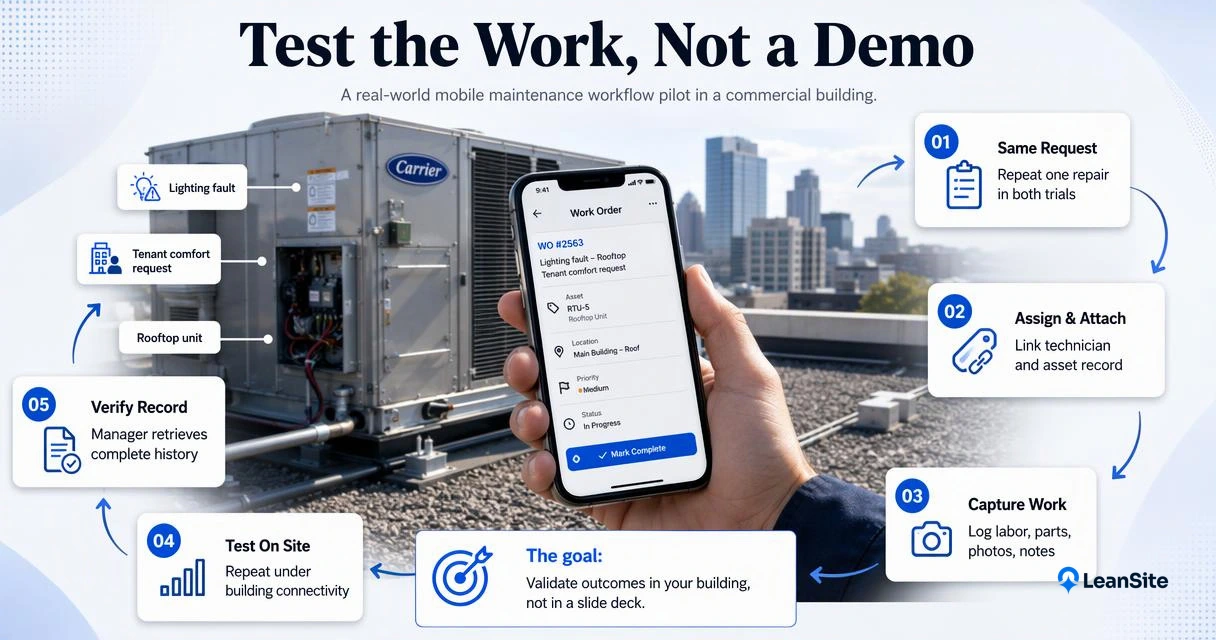
- Assign a technician and attach the asset record.
- Record labor, parts, photographs, and completion notes.
- Repeat the task under actual building connectivity conditions.
- Retrieve the finished record from a manager's account and check its completeness.
Technician Effort During Real Repairs
The strongest mobile workflow is the one technicians can complete accurately during normal work. Use a rooftop unit inspection, a lighting fault, and a tenant comfort request rather than a preconfigured sample ticket.
Record elapsed time and requests for assistance during the pilot. These become original operating evidence, not borrowed benchmarks. Include a technician who didn't configure the system, since familiarity can hide training requirements.
Asset History That Supports Repair Decisions
A useful asset record connects equipment identity with maintenance evidence. For an air-handling unit, test whether the proposed setup keeps location, model, warranty documents, inspection results, and repair history easy to retrieve.
- Check how duplicate asset records are identified.
- Confirm how equipment moves between locations.
- Inspect whether replacement equipment retains an understandable history.
- Verify that managers can distinguish recurring faults from unrelated requests.
The goal isn't the longest record. The goal is a record that helps a manager decide whether another repair makes sense.
Integrations, Administration, and Total Cost
The practical cost of either platform includes setup, ongoing administration, and connected workflows alongside subscription charges. Neither product should receive a pricing advantage without a current written quote covering the same users, sites, and requirements.
Connections That Matter to Commercial Buildings
Integration testing should follow an actual business event from request to financial record. For example, trace an approved contractor job through completion evidence, invoice review, and the accounting destination.
An integration logo isn't enough. Ask which records move, in which direction, how frequently, and who resolves failed transfers. Confirm whether the connection is included, separately priced, or supplied by another provider.
A Comparable Quote and Administration Checklist
A comparable quote spells out both purchased access and expected operating effort.
- List technician, manager, requester, and contractor access requirements.
- Separate subscription, onboarding, migration, training, and integration charges.
- Confirm reporting permissions and export arrangements.
- Identify the person responsible for schedules, user access, and asset cleanup.
- Check renewal terms and the cost of adding locations.
A property owner may prioritize consistent reporting across sites. A facilities manager may place more weight on maintaining schedules without daily spreadsheet work. Both priorities belong in the evaluation.
Who Should Pick Which Platform?
UpKeep should win when its demonstrated workflow fits the operation better; Fiix should win when its demonstrated asset, reporting, and integration setup provides greater value. The available evidence doesn't support assigning those strengths automatically by brand.
Decision Rules for Different Operating Situations
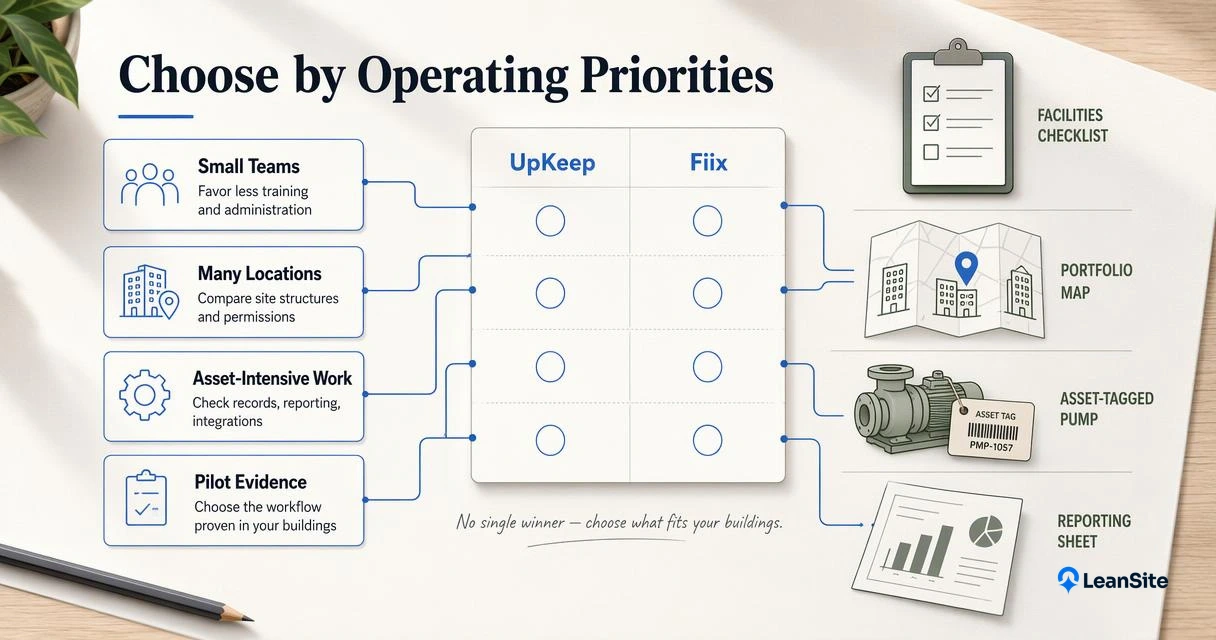
Operating priorities should determine the winner rather than a universal ranking.
- Small facilities teams: Favor whichever trial requires less training and administration while preserving complete records.
- Multi-location operators: Favor consistent site structures, permissions, and comparable portfolio reporting.
- Asset-intensive buildings: Favor accessible equipment histories and repeatable preventive maintenance setup.
- Vendor-heavy operations: Favor clear scope, contractor access, approval evidence, and financial handoffs.
For a weighted scorecard, assign priorities before demonstrations. Otherwise, an impressive feature can overshadow the work that happens most often.
How Leansite Handles This
Leansite belongs in the evaluation as a building-focused alternative to explore through the same practical scenarios. The supplied material doesn't document its specific capabilities, so those should be demonstrated rather than assumed.
The published comparison with Fiix CMMS and comparison with UpKeep offer starting points for follow-up questions. A visit to getleansite.com can start a discussion around the actual properties, maintenance workload, and vendor process.
Conclusion
The best UpKeep vs Fiix decision comes from demonstrated building workflows and a comparable commercial proposal. Select representative repairs, agree on scoring criteria, and request written confirmation of required capabilities. Then schedule a building-specific evaluation through getleansite.com using that same scorecard.
Demi Oloyede
Leansite
Frequently Asked Questions
Which Platform Is Better for Commercial Property Maintenance?
Neither platform can be declared better for every commercial property from the supplied evidence. The deciding test is a representative building workflow covering requests, equipment records, technician completion, vendor involvement, and management reporting. A pilot should include actual staff and real asset data, with plan-specific requirements confirmed in writing.
How Should Teams Compare Pricing?
Teams should request quotes for an identical operating scope rather than compare isolated advertised prices. Include locations, user roles, onboarding, integrations, training, and support requirements. Estimate internal administration separately, using pilot observations. A lower subscription price doesn't necessarily produce a lower operating cost when the proposed workflows differ.
What Should Be Checked Before Migration?
Migration planning should confirm which asset records, attachments, schedules, and historical work orders can transfer into the proposed system. Test a representative sample before moving the full database. Also confirm export options, record ownership, and responsibility for cleanup, so the new system starts with usable maintenance information.
More from the blog
- maintenance vendor coordination
In House vs Outsourced Facility Maintenance: A 2026 Guide
Compare maintenance staffing models by response coverage, skills, workload, and fully loaded costs, with an illustrative budget and hybrid decision guide.
- maintenance history
Best QR Code Asset Tagging Software: A 2026 Buying Guide
Compare QR asset tagging options by labeling, mobile access, maintenance history, and permissions, then validate the right fit with a small-site pilot.
- commercial property maintenance
Facilio vs MaintainX: A Practical Buyer’s Guide for 2026
Compare Facilio and MaintainX through portfolio oversight, technician workflows, integrations, and implementation. Use a practical demo scorecard.