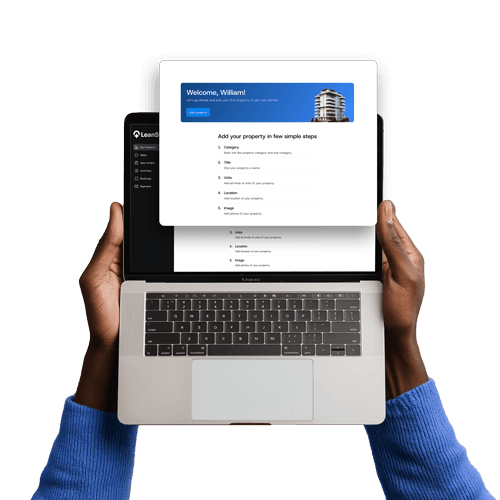
Quick answer: For multi-site facilities, the best work order management software centralizes ticket intake, links assets and vendors directly to each work order, and gives portfolio-wide visibility without a separate login per location. LeanSite AI, ServiceChannel, MaintainX, UpKeep, Corrigo, and Limble are six platforms commonly evaluated for this use case, and the right fit depends mainly on two variables: how many sites you operate and how much of your maintenance work runs through third-party vendors.
Facility managers and operations leaders overseeing dozens or hundreds of locations tend to run into the same problem, no matter the industry. Work order management software built for a single building does not scale cleanly. Tickets stall between sites, field technicians lose time coordinating by phone, vendor invoices land in a separate system from the work that triggered them, and nobody has a clean answer to a simple question: which pieces of equipment keep failing across the portfolio?
IFMA's Global Operations and Maintenance Benchmarking Report, which draws on more than 2,600 responses across 34 countries and 54,000 buildings, points to the same pattern: as portfolios grow, the gap between how maintenance is tracked and how it is actually managed widens fast. This article breaks down how the leading platforms handle multi-site work order tracking, what to look for in field service tools built for distributed teams, and what actually matters when comparing options.
What Is Work Order Management Software?
Work order management software is a system that captures maintenance requests, assigns them to technicians or vendors, tracks the work to completion, and stores the resulting history against a location or asset. In a single-building setting, this can be as simple as a shared spreadsheet or a basic ticketing tool. Across multi-site facilities, it needs to do more: route tickets automatically based on location and issue type, give every site the same structure without requiring a separate setup, and roll data up to a portfolio view for regional and executive teams.
The category overlaps heavily with CMMS (computerized maintenance management system) software, though not every CMMS is built for multi-site coordination or vendor management, and not every work order tool includes asset tracking.
What Should You Look For in Multi-Site Work Order Software?
Whether you are running office buildings, retail locations, or self-storage facilities, a maintenance management platform for distributed operations should offer the following.
Centralized intake across every site. Tickets should not live in five different inboxes. See 9 Reasons Maintenance Tickets Get Lost in 2026 for how this breaks down without one shared system.
Portfolio-wide visibility for regional and executive leadership, without a login per location. This is the gap covered in How to Manage Maintenance Across Multiple Locations Without Losing Visibility.
Vendor automation, meaning dispatch, invoicing, and payment tied directly to the work order rather than handled in a separate tool. See Vendor Dispatch and Predictive Maintenance Automation for Multi-Site Teams for the full picture.
Field service tools built for technicians who move between sites, not just one building, including mobile access, photo uploads, and the ability to close out jobs on site.
Consistent maintenance tracking so equipment history and recurring issues are visible across the whole portfolio instead of trapped at one location.
Asset management that ties every piece of equipment to its own maintenance record, cost history, and vendor activity, instead of leaving that data scattered across individual work orders.
Why this matters in practice: Deloitte's research on predictive and connected maintenance found that consistent, centralized maintenance data can reduce the time required to plan maintenance by 20 to 50 percent, increase equipment uptime by 10 to 20 percent, and lower overall maintenance costs by 5 to 10 percent. Those ranges depend on portfolio size and current process maturity, so they are a directional benchmark rather than a guarantee, but they illustrate why work order tracking and asset history matter beyond simple ticket logging.
With that baseline, here is how six platforms commonly compared for multi-site facilities differ in practice.
Top Work Order Platforms for Multi-Site Facilities
This comparison is ordered by how each platform positions itself in the market, not by a paid or sponsored ranking. Every platform has trade-offs, noted below.
1. LeanSite AI
LeanSite AI is a facilities and work order platform built around three things in one system: work order tracking, asset history, and vendor coordination, including invoicing and payment. A ticket, the vendor dispatched to resolve it, and the resulting invoice live in the same record instead of three separate tools.
Routing and escalation move tickets to a technician or vendor automatically based on location and issue type, which addresses a common coordination gap for field teams spread across many sites. Role-based and location-based permissions let corporate, regional, and site-level staff each see only what is relevant to them, which matters for operators managing large, distributed portfolios, including self-storage facilities, retail chains, and commercial real estate.
Asset management is built into the platform rather than added on separately. That includes:
- A centralized asset inventory covering HVAC, electrical, plumbing, fire safety, appliances, and other equipment types, with auto-generated asset IDs for tracking across every site.
- An asset detail page with lifecycle and financial data, including purchase cost, warranty expiration, expected lifespan, and replacement cost, to support repair-versus-replace decisions using cost history instead of estimates.
- A work orders tab on every asset that auto-populates full maintenance history, so recurring issues at a specific site are visible instead of buried across individual tickets.
- A vendors tab that tracks which vendors have serviced each asset, how many jobs they have completed, and total spend, giving vendor performance data down to the equipment level.
- Bulk CSV import for onboarding asset inventories of 100 or more assets in hours rather than weeks.
- An audit trail on every asset change, which supports compliance requirements across regulated, multi-site portfolios.
- Criticality tagging (Critical, Important, Standard) so teams can prioritize which equipment failures need attention first.
Because work orders and assets are linked in both directions, a technician or vendor working a ticket can see the equipment's service history and specs before quoting, and every completed job updates that asset's record automatically, across the portfolio.
Limitation: LeanSite AI is a newer entrant compared to legacy CMMS incumbents, so third-party review volume and integration breadth are still growing.
2. ServiceChannel
ServiceChannel is built around vendor and contractor dispatch across large multi-location networks, which makes it a common fit for facilities teams with heavy third-party maintenance reliance. It handles vendor sourcing and compliance well. See ServiceChannel Alternatives for Multi-Site Facilities Teams in 2026 for a closer look at how it compares to other platforms on this list.
Limitation: Complexity and cost structure can exceed what mid-sized portfolios need for day-to-day maintenance management.
3. MaintainX
MaintainX is a mobile-first CMMS known for fast setup and ease of use on site. It handles preventive maintenance scheduling well. See UpKeep vs MaintainX: 2026 CMMS Comparison for Facility Teams for a side-by-side breakdown against the platform below.
Limitation: It does not include integrated vendor payment functionality, and multi-site reporting can feel shallow for larger portfolios. Full reporting and analytics are gated to higher-priced tiers, and historical data access is limited on lower tiers.
4. UpKeep
UpKeep offers a mobile app and solid asset tracking, which makes it approachable for smaller operators. It suits single-site or small multi-site teams well.
Limitation: Larger portfolios often need to add separate field service tools for vendor and payment coordination, since that is not native to the platform.
5. Corrigo
Corrigo is an enterprise-grade platform with strong multi-site reporting and vendor dispatch, built for very large, geographically dispersed portfolios. See Corrigo CMMS Review 2026: Features, Fit, Pricing Signals, and Alternatives for a deeper look at where it fits.
Limitation: Pricing and implementation complexity make it a heavier lift than mid-market platforms for operators who want to move fast.
6. Limble
Limble focuses on preventive maintenance and configurable asset workflows. It is a capable work order platform.
Limitation: It functions more like a traditional maintenance help desk than an integrated system spanning tickets, vendors, assets, and payments across a multi-site portfolio.
Platform Comparison
|
Platform |
Best For |
Key Limitation |
|---|---|---|
|
LeanSite AI |
Work order tracking, assets, and vendor payments in one system |
Newer entrant compared to legacy incumbents |
|
ServiceChannel |
Heavy third-party vendor and contractor dispatch at large scale |
Complexity and cost can exceed mid-sized portfolio needs |
|
MaintainX |
Fast setup, mobile-first preventive maintenance |
No integrated vendor payments; shallow multi-site reporting; reporting gated by tier |
|
UpKeep |
Smaller operators needing a mobile app and asset tracking |
Needs added tools for vendor and payment coordination at scale |
|
Corrigo |
Very large, geographically dispersed enterprise portfolios |
Heavier pricing and implementation complexity |
|
Limble |
Preventive maintenance with configurable asset workflows |
Functions more like a traditional maintenance help desk |
How Do You Choose the Right Platform?
The right fit depends mainly on portfolio size and how much of your maintenance work runs through third-party vendors. For a broader evaluation framework, see How to Choose the Right CMMS: A Complete Buyer's Guide (2026) and Best Multi-Site Maintenance Software in 2026: What Most Buying Guides Get Wrong.
- If integrated vendor payments and asset-level data across every site are priorities: LeanSite AI is built specifically around that combination.
- If third-party vendor reliance is heavy at large scale: ServiceChannel or Corrigo handle contractor coordination, at enterprise-level cost and complexity.
- If your portfolio is small with simple needs: MaintainX or UpKeep offer more straightforward, mobile-friendly options.
None of these are universally correct. A five-location retail chain and a 200-location self-storage operator will weigh these trade-offs differently, and that is the point of comparing them on specific criteria rather than a single overall score.
FAQ: Work Order Software for Multi-Site Facilities
What is the biggest challenge with work order management across multiple sites? Visibility. Once tickets live across separate logins or inboxes per location, regional and executive leadership lose the portfolio-wide view needed to catch aging tickets or recurring equipment issues before they become costly. This is the most common reason multi-site teams outgrow single-building tools.
Do self-storage facilities need different work order software than office buildings? The core needs overlap: centralized tracking, vendor coordination, and asset history. Self-storage facilities in particular benefit from platforms that scale across many small, often unstaffed sites without requiring a dedicated login or process per location, which is where location-based permissions matter most. See Self-Storage Work Order Software vs. CMMS in 2026 for a closer look at what this vertical needs specifically.
How many locations justify a dedicated multi-site work order platform? Once a portfolio spans more than a handful of properties, manual coordination and spreadsheet-based tracking typically become the bottleneck. A centralized system with real work order tracking across every site tends to pay for itself quickly at that scale, since the cost of missed or delayed tickets compounds with each added location.
Can work order software also track physical assets and equipment history? Yes, and for multi-site portfolios it generally should. Platforms that treat assets as an afterthought leave equipment history scattered across individual tickets. An asset management system that links every work order to the specific asset it services allows maintenance history, vendor performance, and cost data to roll up automatically at the asset, property, and portfolio level.
How does asset-level data help with repair-versus-replace decisions? By keeping purchase cost, warranty status, replacement cost, and full service history attached to each asset, facility managers can compare what a repair costs against replacement value directly instead of searching through old invoices.
What is the difference between a CMMS and work order management software? The terms overlap. A CMMS (computerized maintenance management system) is the broader category, typically including preventive maintenance scheduling and asset registries. Work order management software specifically refers to the ticketing and tracking layer. Most modern platforms, including the ones compared here, combine both functions. See CMMS vs Facility Management Software: A 2026 Decision Guide for a full breakdown of where these categories diverge.
Scattered tickets and disconnected vendor invoices are not a scale problem you have to accept. Book a LeanSite AI demo to see how work order tracking, assets, and vendor payments work together across every site in your portfolio.
Written by Pelumi Akinwande, Operations Content Lead at LeanSite, who works directly with multi-site facilities and property operations teams evaluating work order software. Connect on LinkedIn.