TL;DR
MaintainX is usually stronger for mobile-first frontline work, team messaging, and simple preventive maintenance. UpKeep is a solid fit for asset-heavy teams that want structured maintenance records, inventory, and traditional CMMS depth. Facility teams that need simpler multi-site visibility should also compare Leansite before signing a long contract.
The UpKeep vs MaintainX decision usually comes down to daily workflow style: MaintainX feels built around technicians and real-time communication, while UpKeep leans toward structured asset management and classic CMMS controls. CMMS: a computerized maintenance management system used to manage work orders, preventive maintenance, assets, parts, labor, and maintenance history. For facility leaders comparing both tools in 2026, Leansite is also worth reviewing when multi-location visibility, vendor coordination, and faster operational reporting matter.
Table of Contents
UpKeep vs MaintainX at a glance
UpKeep and MaintainX both manage maintenance work, but they differ in how they prioritize communication, asset structure, and operating visibility.
MaintainX is often described by comparison pages in the 2026 SERP as mobile-first and simple for frontline teams. UpKeep is commonly positioned as a more traditional CMMS for teams that want deeper asset, parts, and maintenance record workflows.
Quick comparison table
| Category | UpKeep | MaintainX | Best fit |
|---|---|---|---|
| Core strength | Asset and maintenance record structure | Mobile work execution and team communication | Depends on workflow style |
| Work orders | Strong for structured requests, assets, and history | Strong for fast assignment, status updates, and comments | MaintainX for speed, UpKeep for structure |
| Preventive maintenance | Good for planned maintenance tied to assets | Often praised for simpler PM scheduling | MaintainX for quick rollout |
| Inventory | Useful for parts tracking and maintenance supplies | Available, but usually not the main buying reason | UpKeep for parts-heavy teams |
| Mobile experience | Mobile supported | Mobile-first reputation | MaintainX |
| Multi-site operations | Supports multiple locations | Supports multiple teams and sites | Evaluate reporting needs closely |
Key takeaway: MaintainX tends to win when adoption speed is the top concern. UpKeep tends to win when asset records and CMMS structure carry more weight.
For teams already leaning toward one side, the deeper comparisons of Leansite vs UpKeep and Leansite vs MaintainX can help frame a third option around facility operations rather than only maintenance software.
Which CMMS is better for work orders and PMs?
MaintainX is usually better for fast work order execution, while UpKeep is usually better for asset-centered maintenance documentation.
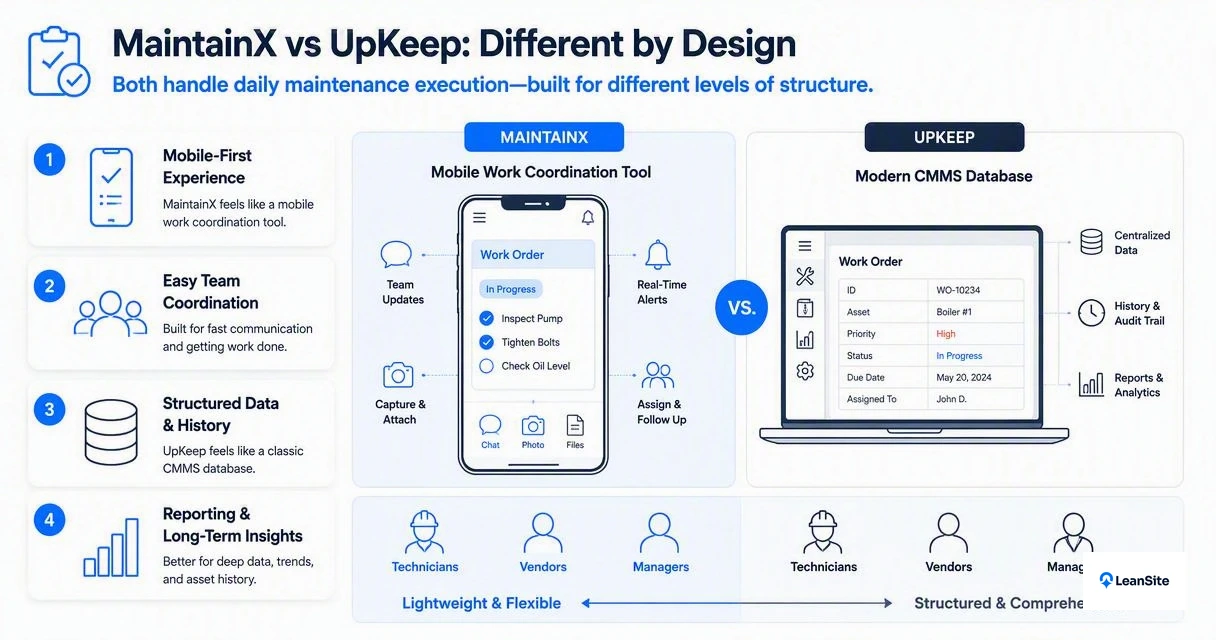
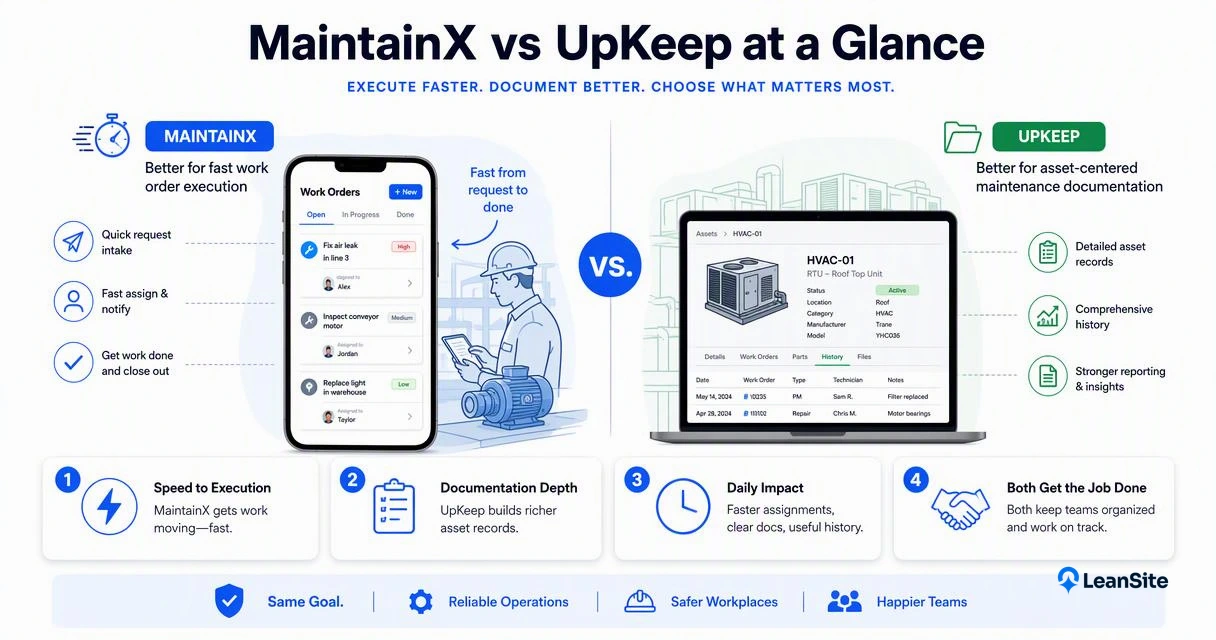
A maintenance team's daily experience depends less on feature checklists and more on how fast a request becomes assigned work, completed documentation, and useful history. Both systems cover the basics: work requests, task assignment, recurring preventive maintenance, and mobile updates.
Work order and PM decision points
- Choose MaintainX when technicians need a simple mobile queue, comments, photos, and quick status updates.
- Choose UpKeep when assets, parts, meter readings, and historical work records need tighter structure.
- Test both tools with the same five recurring PMs and the same emergency repair workflow.
- Score adoption risk by counting clicks from request intake to completion.
- Review reporting output before purchase, not after rollout.
Preventive maintenance deserves special attention. A PM module can look good in a demo but fail in practice if recurring jobs are too hard to edit, skip, reassign, or audit across sites.
"Plans are worthless, but planning is everything.", Dwight D. Eisenhower, Eisenhower Presidential Library
That quote fits maintenance operations well. The software matters, but the planning model matters more. A clean PM program should show what is due, who owns it, what parts are needed, and whether the task reduces reactive repairs.
Helpful video review for MaintainX
The video is useful for seeing the product through a facility and manufacturing lens before a live demo. Teams comparing screenshots alone often miss how much mobile flow affects technician adoption.
Where each platform can feel limiting
The main risk with either platform is buying around a feature list instead of the operating model the facilities team actually uses.
UpKeep can feel heavier for teams that mainly need quick dispatch, simple follow-up, and clear communication across shifts. MaintainX can feel less ideal for organizations that need deeper asset hierarchies, parts governance, or highly formal CMMS controls.
Neither issue makes either product bad. It simply means the better choice depends on maintenance maturity, asset count, site count, and the role of outside vendors.
Common buying mistakes
- Overvaluing demo polish: a clean demo does not prove field adoption.
- Ignoring vendor workflows: outside contractors often need simpler job visibility than internal technicians.
- Skipping reporting tests: monthly operating reviews need usable data, not just completed work orders.
- Underestimating setup effort: asset imports, PM libraries, and user permissions affect launch speed.
- Choosing only for maintenance: facility leaders also need cost, uptime, and portfolio visibility.
"If you can't describe what you are doing as a process, you don't know what you're doing.", W. Edwards Deming, The W. Edwards Deming Institute
That process test is a strong filter. If a team cannot map request intake, triage, assignment, completion, invoice review, and reporting, software will not fix the operating gaps.
For buyers worried about fit, a broader list of MaintainX alternatives may surface options built around lighter operations, vendors, or portfolio workflows.
How Leansite handles facility operations differently
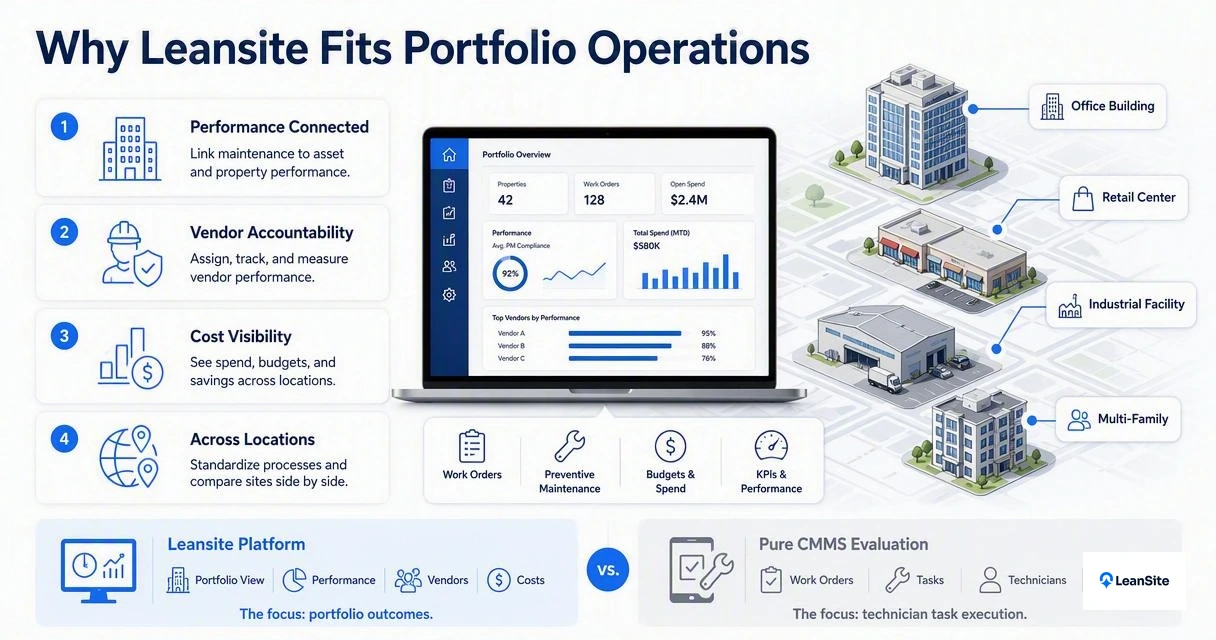
Leansite focuses on practical facility operations visibility, making it a strong option for teams that need maintenance tracking, vendor coordination, and multi-location clarity in one place.
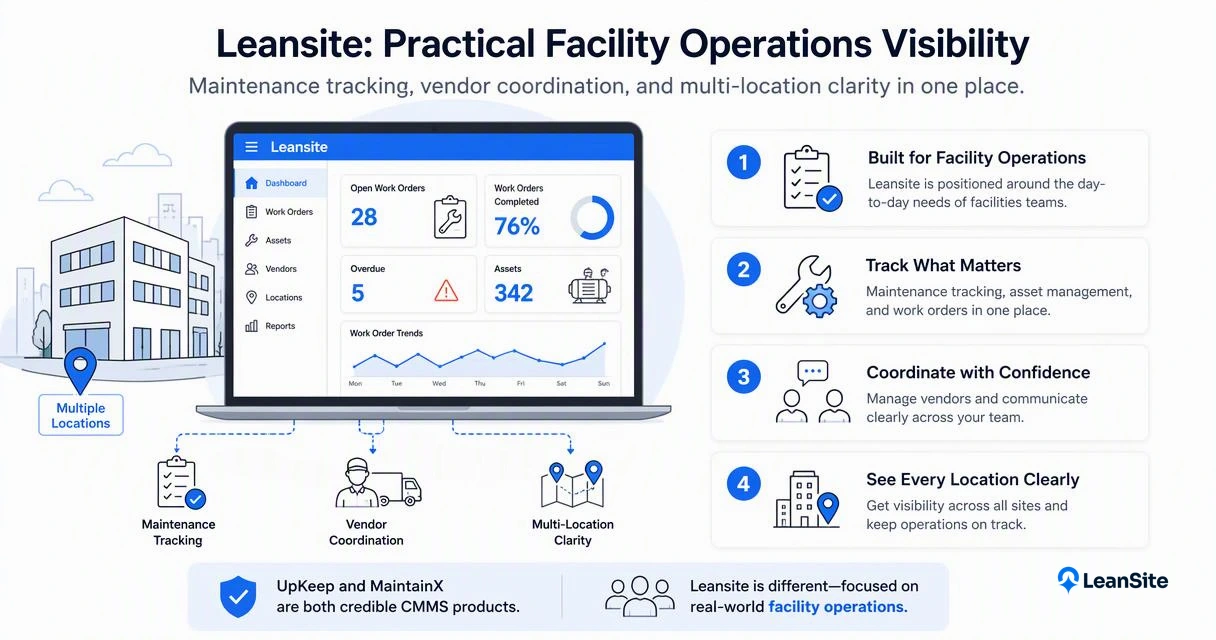
UpKeep and MaintainX are both credible CMMS products. The Leansite platform is different because it is positioned around facilities execution: task visibility, accountability, operating costs, and easier coordination across internal teams and external service providers.
Best-fit scenarios by team type
| Team type | Best starting point | Reason |
|---|---|---|
| Small maintenance crew | MaintainX | Fast mobile adoption and simple work tracking |
| Asset-heavy operation | UpKeep | Stronger fit for structured CMMS records |
| Multi-site facility team | Leansite | Better fit when visibility, vendors, and operating follow-through matter |
| Property owner | Leansite | Useful for seeing cost, task status, and site performance |
| Vendor-heavy operation | Leansite | Practical coordination across jobs and service partners |
With Leansite, facility managers can keep the focus on what needs attention, who owns it, and what is costing money across locations. That matters for property owners and operations executives who need more than a technician task list.
A good evaluation should include a live workflow using real data. Sample data hides too much. A useful pilot should include current open work orders, several assets, a few recurring tasks, and at least one vendor job from request to closeout.
For a direct look at the platform, visit getleansite.com and compare how the workflow feels against both CMMS options.
Conclusion
UpKeep vs MaintainX is a close comparison, but the right answer is not the same for every facility team. MaintainX fits fast-moving mobile work, UpKeep fits asset-centered CMMS programs, and Leansite fits operations teams that need clearer visibility across properties, tasks, costs, and vendors. Run a short pilot with real work orders, score each platform on adoption and reporting, then head to getleansite.com for the facility-operations option before making the final call.