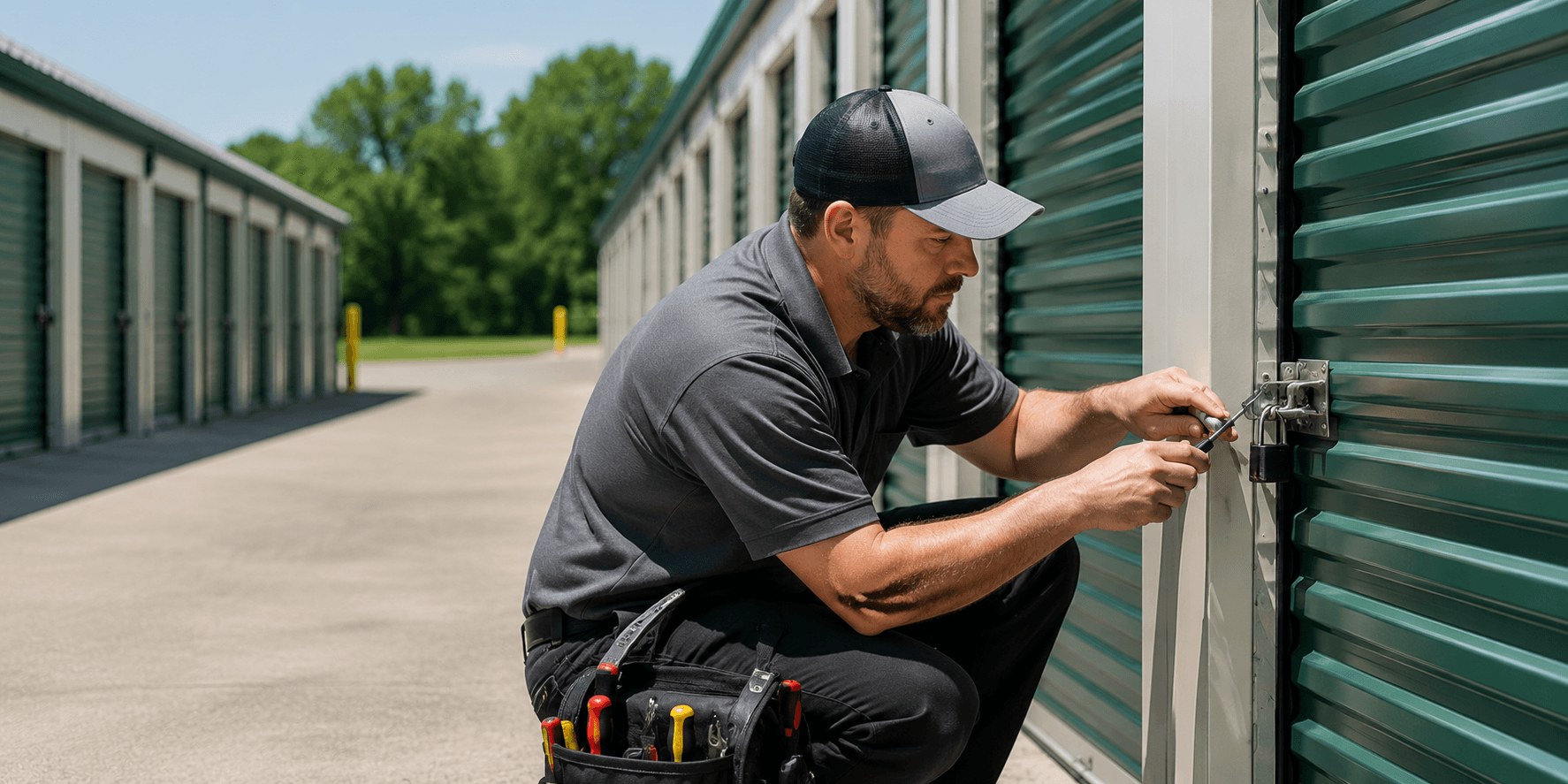
A gate at one of your self-storage sites has been stuck open since Saturday. There's no manager on-site to notice, no maintenance team walking the property, and the ticket that should have caught it is sitting in a general CMMS built for office buildings with technicians on staff.
If that sounds familiar, the problem probably isn't your team. It's the software category. Multi-site property operations leaders evaluating work order management software for self-storage portfolios often start by looking at general CMMS platforms, the same tools built for office buildings, retail, or industrial maintenance. That's a natural place to start, but it usually isn't the right fit.
Quick answer: Self-storage facilities operate differently from most commercial real estate, and general CMMS platforms weren't built with that difference in mind. The gap shows up in four places: setup overhead per site, asset categories built for offices instead of gates and access control, vendor coordination assumptions that don't match a reactive local vendor network, and reporting built around one big building instead of dozens of small, unstaffed ones. For a broader buyer's-eye view of this category, see Best Work Order Management Software for Self-Storage.
Why Doesn't Self-Storage Fit the General CMMS Model?
Most CMMS platforms are designed around buildings with on-site staff, dedicated maintenance teams, and a manageable number of assets per location. Self-storage facilities operate almost the opposite way: dozens or hundreds of small, often unstaffed sites, each with gates, access control systems, climate units, and lighting that need consistent upkeep without a full-time technician at every property.
That structural difference creates specific gaps when a general CMMS gets applied to multi-site management in self-storage, several of which echo the broader buying mistakes covered in our companion guide, Best Multi-Site Maintenance Software in 2026: What Most Buying Guides Get Wrong.
-
Setup overhead per site that doesn't scale when sites are small and numerous.
-
Asset categories built for large buildings, not gate systems, access control, and climate units.
-
Vendor coordination built around scheduled visits, not the reactive, dispersed vendor network self-storage often relies on.
-
Reporting built around one big building, not per-site financials across dozens of small, unstaffed locations.
Any one of these is a minor annoyance at a single site. Across dozens of properties, they add up to a system nobody trusts.
What Should Self-Storage Work Order Software Do Differently?
These are the four capabilities worth checking for in any platform, regardless of which one you're evaluating.
Fast Setup Across Many Small Sites
Self-storage portfolios often add or acquire properties in batches, not one at a time. A platform that requires heavy configuration per site turns onboarding into a multi-week project instead of an afternoon. Look for the ability to push one work order template, checklist, and vendor routing plan to a group of properties at once, filtered by state, region, or tag, rather than setting each site up individually. That matters most right after an acquisition, when a cluster of new properties needs to come online quickly, and for recurring seasonal tasks like a portfolio-wide gate inspection.
Asset Categories That Match Storage Infrastructure
Gates, keypads, cameras, climate-controlled units, and lighting need their own maintenance categories and history, not a generic "equipment" bucket borrowed from office facilities. A platform should let you tag equipment by type and track each asset's own maintenance history, so a recurring gate issue shows up as a documented pattern instead of a series of unrelated tickets. This has a real dollar value behind it, not just a convenience one. The U.S. Department of Energy's Federal Energy Management Program estimates that a functional preventive maintenance program saves roughly 12% to 18%, on average, compared to a reactive-only approach, a gap that widens for equipment like gates and climate units that tend to fail without much warning.
Vendor Coordination Built for a Distributed, Reactive Network
Self-storage relies heavily on local vendors for gate repair, pest control, and climate systems. Property maintenance software should keep dispatch, communication, and invoicing tied to the ticket itself, not scattered across email threads with dozens of local contractors. That means routing to a ranked list of preferred vendors, with a way to fall back automatically if the first choice doesn't respond, and invoicing that stays attached to the original request instead of disappearing into a separate accounts payable process. We go deeper on this pattern in Vendor Dispatch and Predictive Maintenance Automation for Multi-Site Teams.
Real Visibility Into Sites Nobody Visits Every Day
Without someone on-site full-time, work order transparency depends entirely on the system. Tickets, statuses, and vendor activity all need to be visible remotely, since there's no manager walking the property to catch what the software misses. This is a real cost, not just an inconvenience. Facilities teams report spending roughly 60% of their working hours on coordination rather than hands-on repair work, according to data compiled by MPulse Software, and that burden falls hardest on operators trying to track dozens of unstaffed sites by phone. A platform built for this should offer some way to confirm a technician actually visited a site, such as a timestamped, location-verified check-in, along with a simple way to see which properties need attention without pulling a full portfolio report for every one of them.
How Do the Leading Platforms Compare?
MaintainX, ServiceChannel, and LeanSite AI are three of the platforms most commonly discussed across self-storage and multi-site management conversations, and each fits a different kind of portfolio.
MaintainX is a mobile-first CMMS, rated 4.8 out of 5 on G2 across more than 1,300 reviews. It's fast to set up and works well for preventive maintenance checklists, but it wasn't built with self-storage's unstaffed-site model or asset categories in mind, and vendor payment integration is thinner than what a distributed portfolio typically needs.
ServiceChannel leans heavily into vendor and contractor dispatch across large networks, a genuine strength for operations with heavy third-party reliance. Its complexity and enterprise pricing can be more than a mid-sized self-storage operator needs day to day.
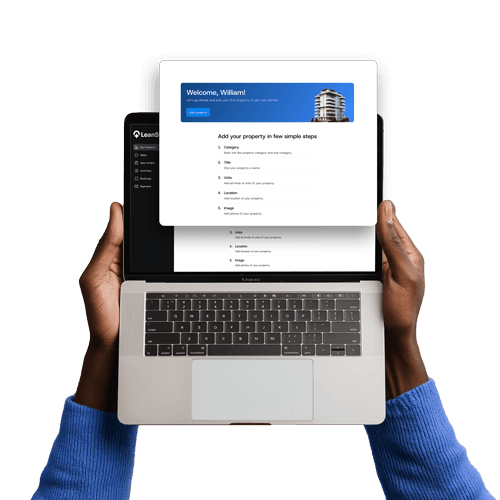
LeanSite AI, the platform this article's publisher builds, is designed around distributed, multi-site portfolios rather than a general CMMS retrofitted for storage. According to its own published feature set, it combines batch onboarding, asset-level history, ranked vendor routing with in-platform invoicing, and portfolio-wide visibility with location-verified check-ins in one system. As with any vendor's description of its own product, that's worth confirming directly in a trial or demo. One real gap: dedicated asset types built specifically for gates or access control aren't in the platform yet, so that equipment currently gets filed under general categories.
How to Choose
|
Portfolio Profile |
Better Fit |
|---|---|
|
Self-storage or other distributed, largely unstaffed portfolios |
LeanSite AI is one option built around this model |
|
Heavy vendor dispatch reliance at enterprise scale |
ServiceChannel handles large contractor networks well |
|
Small footprint, straightforward preventive maintenance |
MaintainX is a reasonable starting point |
Because LeanSite AI is the platform this article's publisher builds, the G2 ratings cited above for MaintainX are independently verifiable, while LeanSite AI's own capabilities are self-described rather than independently reviewed here. Worth weighing directly against a trial or demo before deciding either way.
Book a demo if you'd like to see how any of this looks in practice for your own portfolio.
FAQ: Self-Storage Work Order Software vs. CMMS
What's the main difference between self-storage work order software and a general CMMS? General CMMS platforms are built around staffed buildings with dedicated maintenance teams, while self-storage software needs to account for many small, often unstaffed sites with different asset types and vendor relationships.
Why does vendor coordination matter more for self-storage than other property types? Self-storage relies heavily on local, reactive vendor networks for gates, climate systems, and pest control, so keeping dispatch and invoicing tied to the original ticket avoids the blind spots that come from managing vendors outside the system.
How many self-storage locations justify moving off a general CMMS? Once a portfolio grows past a handful of sites, the setup overhead and mismatched asset categories of a general CMMS tend to outweigh whatever familiarity it offers at a smaller scale, which is usually when it makes sense to evaluate a purpose-built alternative.
How can an operator confirm maintenance actually happened at an unstaffed site? A location-verified, timestamped check-in records when a technician arrived at and left a property, giving an operator confirmation without needing anyone on the ground.
Can a general CMMS's asset categories be adapted for gates and access control? Most general CMMS asset structures are built around large-building equipment like HVAC and elevators, so gates, keypads, and cameras usually get filed under a generic equipment category rather than tracked with their own dedicated history, which is worth checking before committing to a platform.
The right system for self-storage isn't the one with the most features. It's the one built around how these portfolios actually operate.
Written by Pelumi Akinwande, Operations Content Lead at LeanSite, who works directly with multi-site facilities and property operations teams evaluating work order software. Connect on LinkedIn.