TL;DR
Building maintenance cost tracking software works best when every work order ties cost to an asset, vendor, location, and budget line. Facility teams should prioritize systems that reveal repeat repairs, compare property spend, and support capital replacement planning before reactive costs pile up.
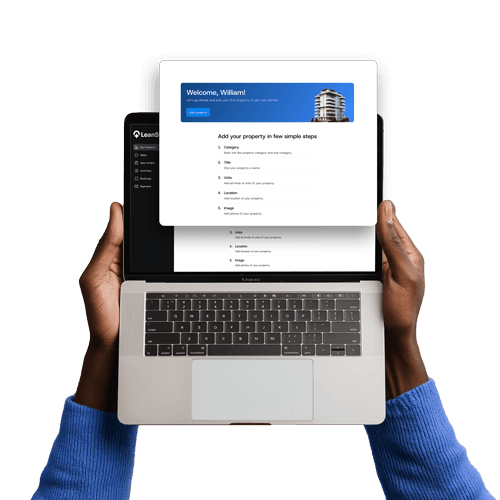
Maintenance spend gets messy fast when invoices live in email, labor hours sit in spreadsheets, and asset history hides inside technician notes. Building maintenance cost tracking software brings those numbers into one operating record, so facility leaders can see which buildings, vendors, systems, and recurring problems drive cost. For teams that need task tracking, vendor coordination, and portfolio visibility in one place, Leansite is built around that connected view rather than another disconnected maintenance inbox.
Building maintenance cost tracking software: a digital system that records maintenance costs by work order, asset, vendor, location, labor, materials, and budget category so teams can analyze spend and reduce avoidable repairs.
Table of Contents
What is building maintenance cost tracking software?
Building maintenance cost tracking software is a facilities tool that connects maintenance work, costs, assets, vendors, and locations into a searchable record for budgeting and decision-making. It often overlaps with a computerized maintenance management system, or CMMS, which Wikipedia defines as software that maintains a database of information about an organization's maintenance operations.
The key difference is focus. A general work order tool tracks tasks. A cost-focused maintenance system tracks tasks plus the money behind them: labor, parts, vendor invoices, emergency callouts, recurring repairs, and capital planning signals.
Key insight: Cost tracking is not accounting after the fact. It is operational intelligence while maintenance decisions are still being made.
Core cost-tracking records
A strong system gives each expense a place to live:
-
Work order: the request, priority, status, labor, parts, and total cost.
-
Asset: the HVAC unit, roof section, elevator, plumbing line, lighting system, or kitchen equipment tied to the work.
-
Vendor: the contractor, dispatch time, quote, invoice, and approval history.
-
Location: the building, floor, unit, store, site, or region where the cost occurred.
-
Budget: the operating expense, project code, capital category, or preventive maintenance plan tied to the spend.
That structure turns maintenance from a list of tickets into a cost map.
How cost tracking connects work orders, vendors, assets, locations, and budgets
Cost tracking becomes useful when each maintenance event carries financial context from request to closeout. A leaking roof ticket, for example, should show the building, roof asset, vendor quote, labor time, materials, invoice, warranty notes, and budget category in one record.
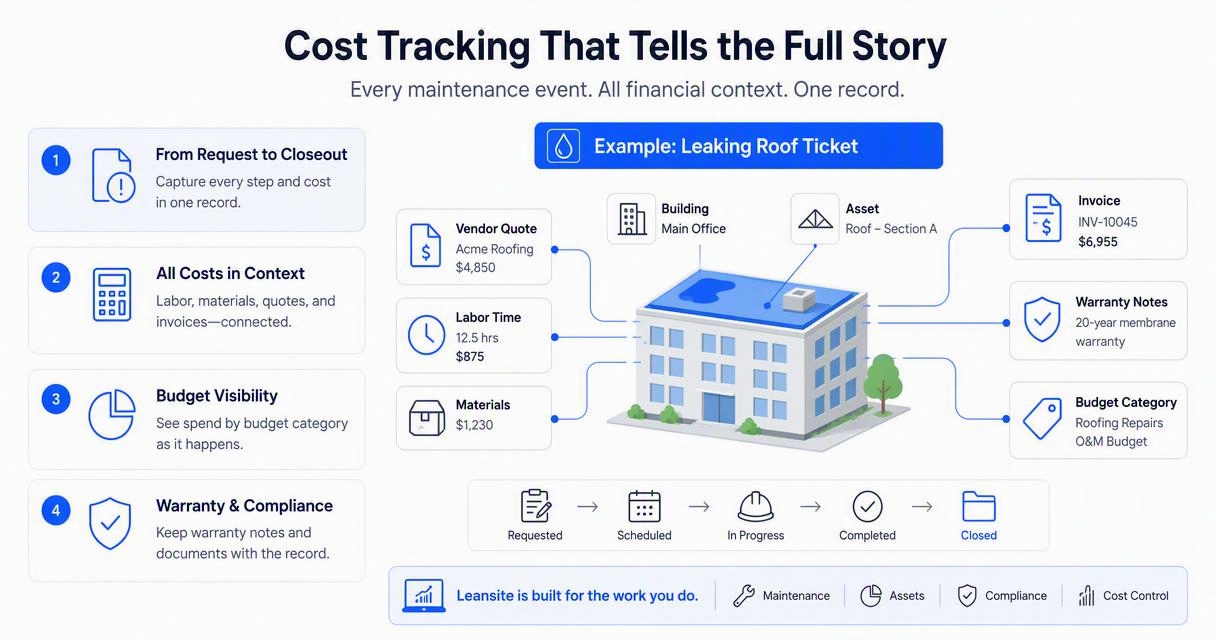
The Leansite platform is designed for that kind of operating view, especially for teams that manage multiple sites and need quick visibility into what happened, what it cost, and whether the same issue keeps coming back. Multi-location teams can also compare broader operating models in this guide to multi-site maintenance software in 2026.
Cost connection matrix
|
Maintenance data |
What it answers |
Cost-control value |
|---|---|---|
|
Work orders |
What work was performed? |
Shows labor, parts, urgency, and completion cost |
|
Assets |
Which equipment is consuming spend? |
Flags repeat repairs and replacement candidates |
|
Vendors |
Who performed the work? |
Compares pricing, speed, quality, and invoice accuracy |
|
Locations |
Where is spend concentrated? |
Ranks buildings, regions, or stores by cost drivers |
|
Budgets |
Which cost center paid for it? |
Keeps operating and capital spend visible |
Good reports rely on consistent tagging. If a technician codes one HVAC unit as "RTU-1" and another person writes "roof AC," the system loses accuracy. Facility leaders should standardize naming conventions before importing old data.
Workflow from request to cost report
A practical cost workflow follows a simple chain:
-
A request becomes a work order with a location and asset.
-
A manager assigns an internal technician or dispatches a vendor.
-
Labor, materials, quote details, and photos attach to the job.
-
Invoice and approval data connect to the same record.
-
The closed work order feeds dashboards by property, asset, vendor, and budget.
"An ounce of prevention is worth a pound of cure.", Benjamin Franklin, National Archives
That line fits facility maintenance because the cheapest repair is often the one prevented by early inspection, recurring service, and clear cost history.
Which reports actually reduce maintenance spend?
The best reports reduce maintenance spend by showing patterns that are hard to see in individual work orders. A single emergency HVAC repair may look routine. Five emergency repairs on the same rooftop unit across one cooling season tells a different story.
Facility teams often need reports that compare properties, identify repeat repairs, plan replacements, and challenge vague vendor costs. For a deeper look at cost creep, the article on the hidden cost of deferred maintenance explains why postponed repairs often become bigger budget issues.
Reports facility leaders should expect
|
Report |
Best use |
Example decision |
|---|---|---|
|
Cost by property |
Compare buildings or stores |
Investigate why Site 14 spends more on plumbing than peers |
|
Cost by asset |
Find repair-heavy equipment |
Replace an aging RTU instead of funding another compressor job |
|
Cost by vendor |
Compare contractor performance |
Renegotiate rates or reassign recurring work |
|
Reactive vs preventive cost |
Balance emergency work against planned service |
Increase preventive visits for high-risk systems |
|
Repeat issue report |
Spot recurring failures |
Review root cause instead of reopening similar tickets |
|
Budget variance |
Track spend against plan |
Shift funds before year-end surprises |
A useful dashboard should not bury leaders in charts. It should make the next action obvious: repair, replace, rebid, inspect, defer, or escalate.
Helpful software overview video
For teams still comparing property and facilities tools, this overview gives a plain-language look at common software categories:
A property management platform may track leases, tenants, and accounting. A maintenance cost platform should go deeper on work orders, asset history, vendor dispatch, field updates, and facilities reporting.
How to choose a cost-tracking system in 2026
A 2026-ready cost-tracking system should connect field activity to financial reporting without forcing technicians, vendors, or managers into extra admin work. Buying decisions should start with the reports leadership needs, then work backward to the data required from daily maintenance activity.
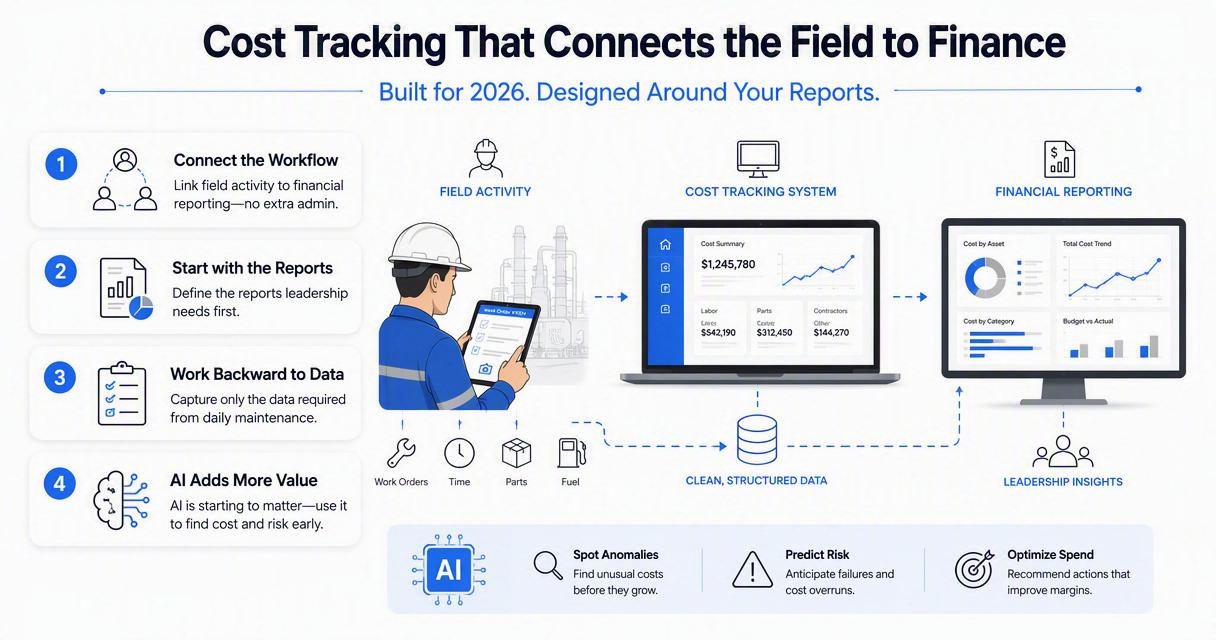
AI is starting to matter, but clean operational data still matters more. Research on generative AI, such as the 2023 paper by Dwivedi, Kshetri, Hughes, and coauthors, highlights opportunities and risks across research, practice, and policy. In facilities, the practical takeaway is simple: AI recommendations are only useful when the underlying work order and cost data are trustworthy.
Selection checklist for facilities teams
A solid evaluation should cover:
-
Work order costing: labor, materials, vendor charges, taxes, trip fees, and attachments.
-
Asset-level history: total lifetime cost, failure patterns, warranty notes, and replacement signals.
-
Vendor dispatch: assignment, quote approvals, job status, invoice matching, and faster payment workflows.
-
Multi-location reporting: property comparisons, regional rollups, and site-level budget views.
-
Offline access: field updates in basements, rooftops, mechanical rooms, and low-signal sites. The need is covered in this article on offline maintenance software.
-
Preventive maintenance planning: recurring tasks that feed cost forecasts. A practical setup guide is available in this preventive maintenance ticket flow walkthrough.
The system should also export clean data for finance without turning the finance team into software detectives.
How Leansite handles this
Leansite connects maintenance tasks, vendor activity, site data, and asset records so cost reporting reflects real operational work. That matters for facility directors who need to explain not only how much was spent, but why the spend happened.
With Leansite, a multi-site team can track a repair from request to vendor dispatch to closeout, then review spending by property, issue type, or asset. For brand teams, retail operators, and commercial portfolios, that single chain of record helps reduce the gap between field reality and budget reporting. More details are available at getleansite.com.
What to expect from maintenance cost tracking in 2027
Maintenance cost tracking in 2027 will likely move from backward-looking reports toward earlier warnings, faster approvals, and smarter replacement planning. The shift will not remove human judgment. It will give facilities leaders cleaner evidence before budgets are locked.
AI-assisted facilities tools are already moving toward automatic work order summaries, anomaly detection, vendor recommendations, and predictive scheduling. For a deeper view of that trend, see AI facility management software.
Likely next capabilities
Expect more systems to support:
-
Repair-versus-replace prompts based on asset age, repair frequency, and cost history.
-
Budget risk alerts when a property is trending above plan.
-
Vendor performance scoring tied to response time, cost, callbacks, and invoice accuracy.
-
Portfolio benchmarking across similar buildings, stores, or regions.
-
Automated capital planning inputs from repeat repair and asset lifecycle data.
Key insight: The future of facilities cost control is not just cheaper repairs. It is earlier decisions with better context.
FAQ
What costs should maintenance software track?
Maintenance software should track labor, parts, materials, vendor charges, trip fees, emergency premiums, taxes, permits, and internal time. The strongest systems also tie those costs to assets, properties, budgets, and work order categories. That structure helps leaders separate normal operating spend from repeat failures and capital replacement signals.
Is a CMMS the same as cost tracking software?
A CMMS can include cost tracking, but not every CMMS makes cost analysis easy. Traditional CMMS tools often focus on work orders, preventive maintenance, and asset records. Cost-focused facilities software adds clearer reporting around vendor spend, budget variance, property comparisons, and repair history.
How does cost tracking help multi-location maintenance teams?
Cost tracking helps multi-location teams compare sites using the same categories, naming rules, and approval process. Leaders can see which properties spend more on certain systems, which vendors create callbacks, and which assets keep failing. Guidance on visibility across locations is covered in this multi-location facilities management guide.
When should an asset be replaced instead of repaired?
An asset becomes a replacement candidate when repair frequency, downtime, vendor cost, and operational disruption outweigh the value of another fix. Cost history makes that decision easier. A single repair may not justify replacement, but repeated emergency work on the same asset often supports a capital planning review.
Conclusion
Building maintenance cost tracking software gives facilities teams a cleaner way to explain spend, control vendors, compare sites, and plan replacements before emergencies dominate the budget. The next step is practical: choose five cost reports leadership needs, standardize asset and location naming, then audit whether current work orders capture the data required. Teams ready for connected maintenance, vendor, asset, and budget visibility can evaluate Leansite and visit getleansite.com to see how the workflow fits their portfolio.