TL;DR
Start with one representative property, clean its asset records, and test complete work orders before expanding. Use the proposed 90-day schedule as a planning template, with progress tied to readiness checks rather than calendar dates. Assign owners for training, vendor onboarding, and reporting.
A facility management software implementation plan should prove that a team can complete real maintenance work, not just import a spreadsheet. A staged rollout connects asset records, dispatch, vendor updates, and cost reporting before expanding across properties.
Implementation plan: A phased roadmap defining scope, owners, data requirements, training, and acceptance checks for putting facility software into daily use.
For teams evaluating Leansite, this playbook provides a practical rollout framework. The broader guide to multi-location facilities management software covers platform selection and portfolio needs; this article focuses on deployment.
Table of Contents
How should a facility software rollout be phased?
- Define the pilot property's scope, project owner, and success measures.
- Clean asset and vendor records before importing them.
- Configure request categories, permissions, approvals, and dispatch rules.
- Train each role using real maintenance scenarios.
- Expand only after the pilot meets agreed data, workflow, and adoption checks.
Proposed 90-day timeline and acceptance gates
A 90-day schedule is a planning template, not a guaranteed implementation duration. A single site with organized records may need less time; a portfolio with integrations may need more.
| Phase | Suggested timing | Accountable owner | Acceptance gate |
|---|---|---|---|
| Scope and baseline | Days 1-15 | Facilities lead | Pilot, budget, measures, and responsibilities approved |
| Data preparation | Days 16-30 | Data owner | Sample asset and vendor records validated |
| Configuration and testing | Days 31-45 | System administrator | Routing, permissions, and approvals tested |
| Pilot and training | Days 46-60 | Site champion | Staff complete representative jobs |
| Expansion and review | Days 61-90 | Operations sponsor | Sites meet readiness checks; reports reconcile |
Name one sponsor who can resolve scope decisions and one administrator who owns configuration. Finance should approve cost definitions before reporting starts.
Calendar dates organize the rollout; acceptance gates decide whether the next phase should begin.
Which records should be cleaned before import?
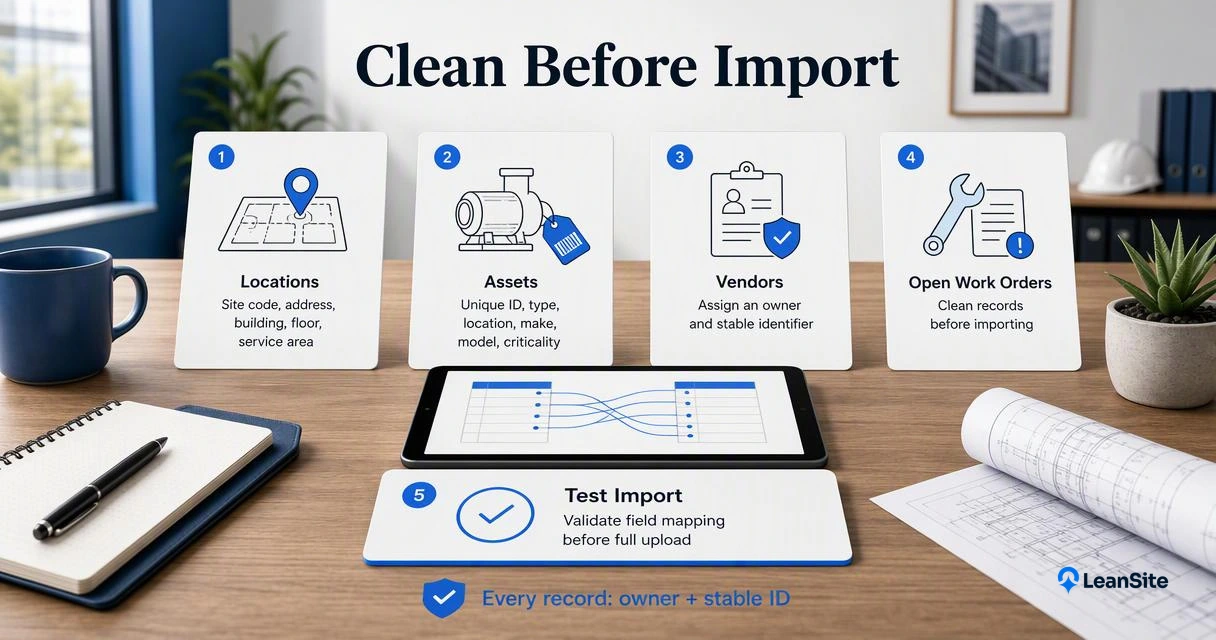
Asset, location, vendor, and open-work-order records should be cleaned before import so maintenance activity connects to the right equipment and property. Each record needs an owner, a stable identifier, and enough information to support dispatch or reporting. A small test import should confirm field mapping before the full upload.
Minimum data preparation checklist
The data owner should validate these fields with the people who maintain the equipment:
- Locations: Site code, address, building, floor, and service area.
- Assets: Unique ID, equipment type, location, make, model, and criticality.
- Maintenance schedules: Task, interval, responsible role, and next due date.
- Vendors: Trade, coverage area, dispatch contact, agreement terms, and required documents.
- Open jobs: Status, priority, assignee, asset reference, and supporting attachments.
For example, an HVAC unit labeled RTU-03 needs a site code because another property may use the same label. A combined identifier such as ATL01-RTU03 preserves the distinction.
Test a small batch containing different asset types, missing optional fields, and active jobs. Compare imported records against the originals, including attachments and dates. Keep the source export until reconciliation is complete.
Import active jobs and essential service history first. Older records can remain in an accessible archive when they don't support current maintenance, warranty, or compliance needs.
How should workflows, vendors, and staff be prepared?
- Set work-order categories and priorities using clear operational definitions.
- Assign dispatch ownership, approval limits, and escalation contacts.
- Onboard vendors with access rules and job-completion requirements.
- Train requesters, technicians, managers, and finance through role-specific exercises.
- Run complete pilot jobs from submission through cost approval before expansion.
Configure the complete job lifecycle
Start with categories such as HVAC, plumbing, electrical, cleaning, and safety. Keep category separate from urgency: a plumbing request could be routine maintenance or an active leak.
Define who accepts a request, dispatches a vendor, authorizes additional spending, and verifies completion. Require completion notes and supporting evidence appropriate to the job. The facilities ticket management guide provides related background on request handling.
Test mobile access from actual service areas. The guide to connectivity costs is useful follow-up when assessing field access requirements.
How Leansite handles this
Leansite's built-in AI assistant, Vera, provides an additional topic for role-based onboarding, alongside the core maintenance workflow. The Vera introduction gives teams a starting point for reviewing the assistant's intended use.
Training should use practical tasks: a requester submits a fault, a technician records completion, and a manager checks the resulting report. Each participant should complete the exercise independently before receiving sign-off. A named site champion can collect questions during the pilot.
Which reports prove readiness for expansion?
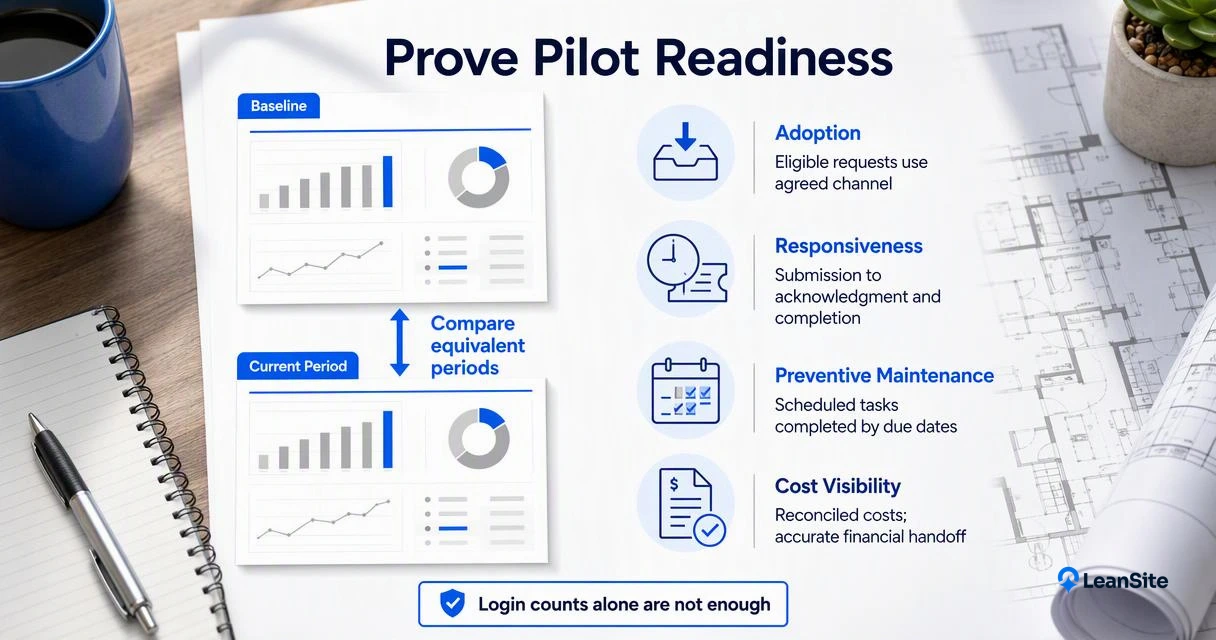
Readiness reports should show adoption, job progress, preventive maintenance completion, and reconciled costs at the pilot property. Establish definitions and a baseline before launch, then compare equivalent periods. Login counts alone don't demonstrate operational use; completed maintenance records and accurate financial handoffs provide stronger evidence.
Weekly implementation scorecard
- Adoption: Eligible requests entered through the agreed channel.
- Responsiveness: Time from submission to acknowledgment and completion.
- Preventive maintenance: Scheduled tasks completed by their due dates.
- Cost visibility: Labor, materials, and vendor charges assigned to sites and assets.
- Record quality: Closed jobs containing required evidence and approvals.
Separate emergency and routine jobs so averages remain meaningful. Reconcile a sample of recorded costs with finance before portfolio expansion.
For 2026 planning, treat AI-assisted workflows as a separate acceptance test. The AI facility management software guide offers further context; human reviewers should verify outputs before operational decisions.
Conclusion
Turn the facility management software implementation plan into an assigned project: select the pilot, name the data owner, and schedule the first acceptance review. Teams considering the Leansite platform can visit getleansite.com and prepare a walkthrough around one real asset, one vendor job, and one reporting requirement.