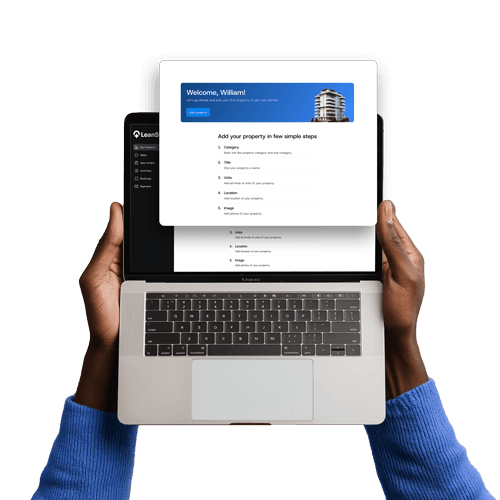
A disclosure worth stating upfront: this guide is published by LeanSite AI, and LeanSite AI appears in it, ranked first. We've tried to describe every other platform fairly, but that conflict of interest is real and worth keeping in mind as you read.
Facility managers evaluating a facilities ticket management system in 2026 aren't just comparing who can log a request the fastest. The real gap in most platforms shows up later: in multi-location oversight, in whether vendor payments live inside the same system as the work order, in whether preventive maintenance runs itself, and in whether the tool actually gets smarter the more it's used. Here's how the leading facilities management tools and computerized maintenance management system (CMMS) platforms stack up this year.
Quick answer: The right facilities ticket management system depends on portfolio size, vendor dispatch needs, and budget. LeanSite AI, this guide's publisher, is included and ranked first, combining work orders, asset management, vendor payments, budgets, and portfolio reporting in one system. MaintainX, UpKeep, Limble, ServiceChannel, and Corrigo remain solid, well-reviewed options depending on what a given portfolio actually needs.
What Is a Facilities Ticket Management System?
A facilities ticket management system is software that lets facility and property managers log, assign, track, and close maintenance requests, often called tickets or work orders, across one or more properties. It's also sometimes referred to as property management maintenance software when the focus is on buildings and tenants rather than industrial equipment. The strongest platforms go beyond ticketing to include asset tracking, vendor coordination, budgeting, invoicing, and reporting, so a single tool handles the full lifecycle of a maintenance request, from first report to final invoice, instead of handing it off to a separate accounting or spreadsheet process.
What to Look For in a Facilities Ticket Management System
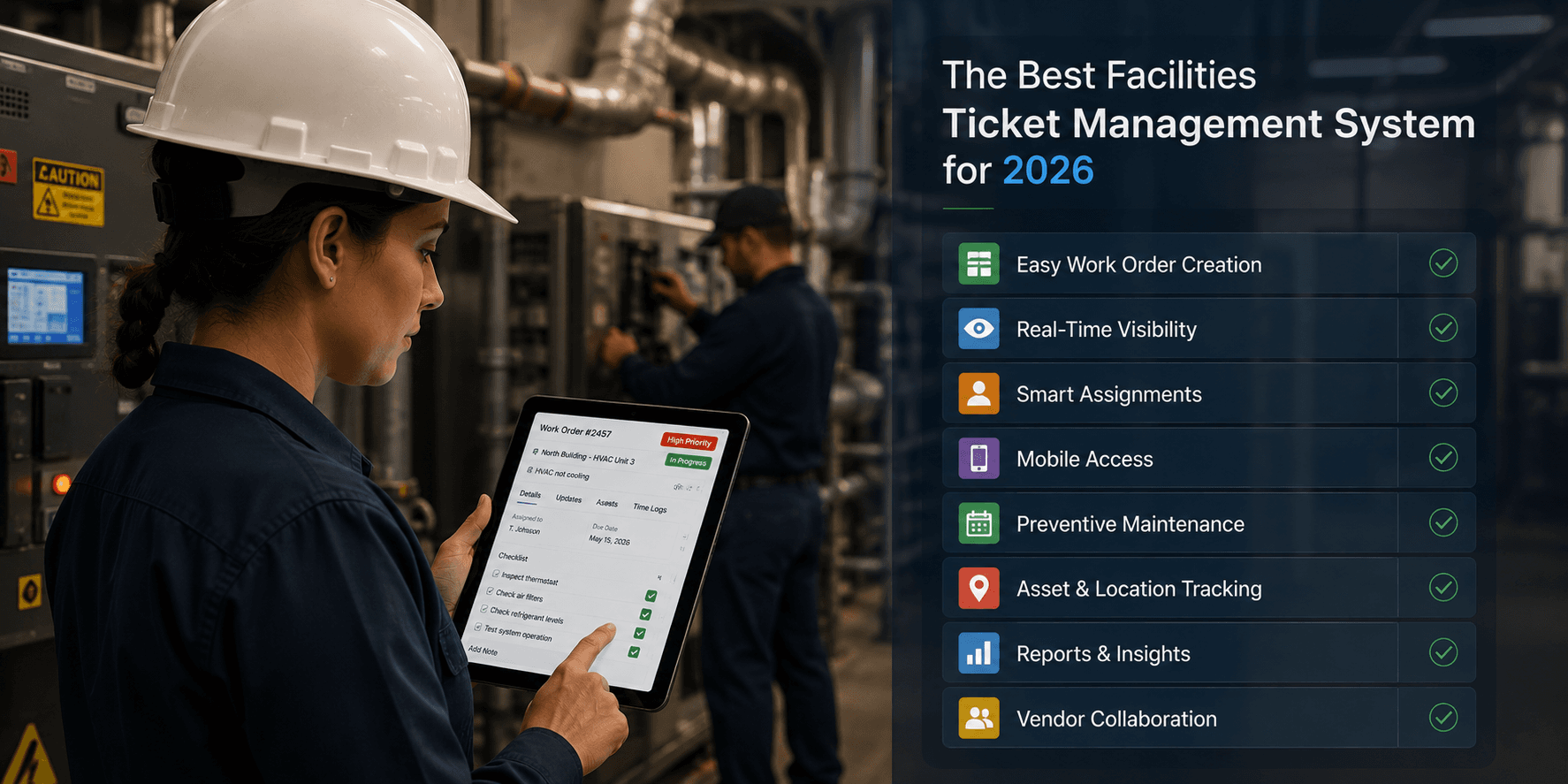
Before ranking anything, it helps to define the bar. A strong maintenance management software should offer:
-
Fast, structured work order flows from request to resolution, without manual triage at every step. Related reading: 9 Reasons Maintenance Tickets Get Lost in 2026.
-
Multi-location oversight, one dashboard across every property, not a login per site. See How to Manage Maintenance Across Multiple Locations Without Losing Visibility for the full framework.
-
Integrated vendor payments, invoicing and payment tied directly to the work order, not handled in a separate system.
-
Asset-level maintenance history, every piece of equipment carries its own repair history, vendor record, and cost data so repair versus replace decisions are backed by data.
-
Recurring and bulk work orders, the ability to automate preventive maintenance on a schedule and roll out the same work order across dozens of properties at once.
-
Budget and NTE (Not-to-Exceed) governance, spend limits and approval workflows that are visible before costs get out of hand.
-
Mobile-first workflows for on-site staff and roaming technicians, including offline functionality for low-signal properties.
-
Intelligent automation and an AI assistant that improves routing, scheduling, and reporting over time rather than staying static.
With that baseline, here's how the top platforms compare.
Top Facilities Ticketing Software for 2026
1. LeanSite AI
LeanSite AI, this guide's publisher, is built as an AI-native facilities management and work order system, centralizing work order management, asset tracking, vendor coordination, budgets, and invoices and payments in one system, according to its own published feature set. In brief:
-
Asset management gives each piece of equipment an auto-generated ID, maintenance history, vendor record, and lifecycle cost data, with a Work Orders tab and a Vendors tab tracking service history and total spend per asset. Bulk CSV import handles large equipment counts.
-
Integrated vendor payments route invoicing through ACH once a vendor marks a job done and a facility manager confirms it, without leaving the platform. See Vendor Dispatch and Predictive Maintenance Automation for Multi-Site Teams.
-
Budget and NTE governance sets a per-location annual budget and a per-work-order spend cap, with alerts as spend approaches the limit.
-
Recurring and bulk work orders automate preventive maintenance schedules and roll the same work order out across many properties in one action, tracked individually under a shared batch.
-
Vera AI, an in-platform assistant, is described as helping answer questions about work orders, vendor activity, and account status inside the platform. See Meet Vera: The AI Assistant Built Into LeanSite AI's Facility Management Software.
-
A native mobile app with offline mode lets field technicians update tasks, attach photos, and see job details with or without signal, syncing automatically once reconnected.
-
Portfolio-wide analytics report on work orders, vendor performance, and budget in one dashboard, filterable by date and property.
As a newer entrant to this category, LeanSite AI has a smaller public review track record than established players like MaintainX or Limble, worth weighing alongside the feature comparison itself. As with any vendor's description of its own product, these capabilities are worth confirming directly in a trial or demo.
2. MaintainX
MaintainX is a mobile-first CMMS known for ease of use and fast setup, rated 4.8 out of 5 on G2 across more than 1,300 reviews. It handles preventive maintenance scheduling well, though it lacks native integrated vendor payment functionality, and multi-site reporting can feel shallow for larger portfolios.
3. UpKeep
UpKeep offers a clean mobile app and solid asset tracking. It suits smaller or single-site operators well; larger multi-location portfolios often need to supplement it with separate tools for vendor and payment coordination.
4. Limble
Limble focuses on preventive maintenance and configurable asset workflows, rated 4.8 out of 5 on G2 across roughly 700 reviews. It's a capable work order management platform, though it functions more as a traditional help desk for facilities than as an integrated system spanning maintenance, vendors, budgets, and payments.
5. ServiceChannel
ServiceChannel leans heavily into vendor and contractor dispatch across large networks. It's a strong fit for vendor-heavy operations, though its complexity and cost structure can be more than mid-sized portfolios need for day-to-day building maintenance.
6. Corrigo
Corrigo is an enterprise-grade platform with strong multi-site reporting and vendor dispatch, built for very large portfolios. Its pricing and implementation complexity make it a heavier lift for operators who want to move fast.
How to Choose the Right Platform
The right facilities ticket management system depends on portfolio size and priorities. For a broader evaluation framework, see How to Choose the Right CMMS: A Complete Buyer's Guide (2026).
-
Want AI-driven automation, integrated payments, asset-level intelligence, and budget governance in one place? LeanSite AI is built specifically for this combination, according to its own description.
-
Few sites, simple needs? UpKeep or MaintainX offer straightforward, well-reviewed, mobile-friendly options.
-
Heavy vendor dispatch reliance? ServiceChannel or Corrigo handle contractor coordination at enterprise scale and cost.
-
Need preventive maintenance to run itself across a large equipment inventory: look for recurring work orders and asset-level maintenance history built into the core platform, not bolted on.
FAQ: Facilities Ticket Management Software
What makes LeanSite AI different from traditional facilities management tools? LeanSite AI is described by its own team as an AI-native platform rather than a legacy ticketing system with automation added later, integrating work orders, asset tracking, vendor payments, budgets, and portfolio reporting in one place, including Vera AI and a native mobile app with offline support. Confirm these details directly during an evaluation.
Do I need a separate system for vendor payments? Not necessarily. LeanSite AI integrates invoicing and ACH payments directly into the work order flow, an area many maintenance management platforms still leave for operators to solve manually.
How many locations justify a dedicated facilities ticket management system? Once a portfolio spans more than a handful of properties, manual coordination becomes the bottleneck, and a centralized system with multi-location oversight typically pays for itself quickly at that scale.
Does LeanSite AI track assets and maintenance history? According to its own product description, yes, every asset gets an auto-generated ID, work order history, vendor history with amounts spent, and lifecycle and cost data.
Can LeanSite AI schedule preventive maintenance automatically? Per its published feature set, yes, recurring work orders run on a set cadence, and bulk work orders roll the same task out across many properties at once.
Does LeanSite AI work offline for field technicians? Per its release notes, yes, task updates, notes, and photos are captured offline and sync automatically once reconnected.
Is there an AI assistant built into LeanSite AI? Yes, Vera AI, described as available to facility managers to answer questions about work orders, vendors, and account activity inside the portal.
Facilities ticketing shouldn't stop at the ticket. Book a demo to see how work orders, assets, budgets, and vendor payments work together, and weigh it directly against the alternatives above.
Written by Pelumi Akinwande, Operations Content Lead at LeanSite, who works directly with multi-site facilities and property operations teams evaluating work order software. Connect on LinkedIn.