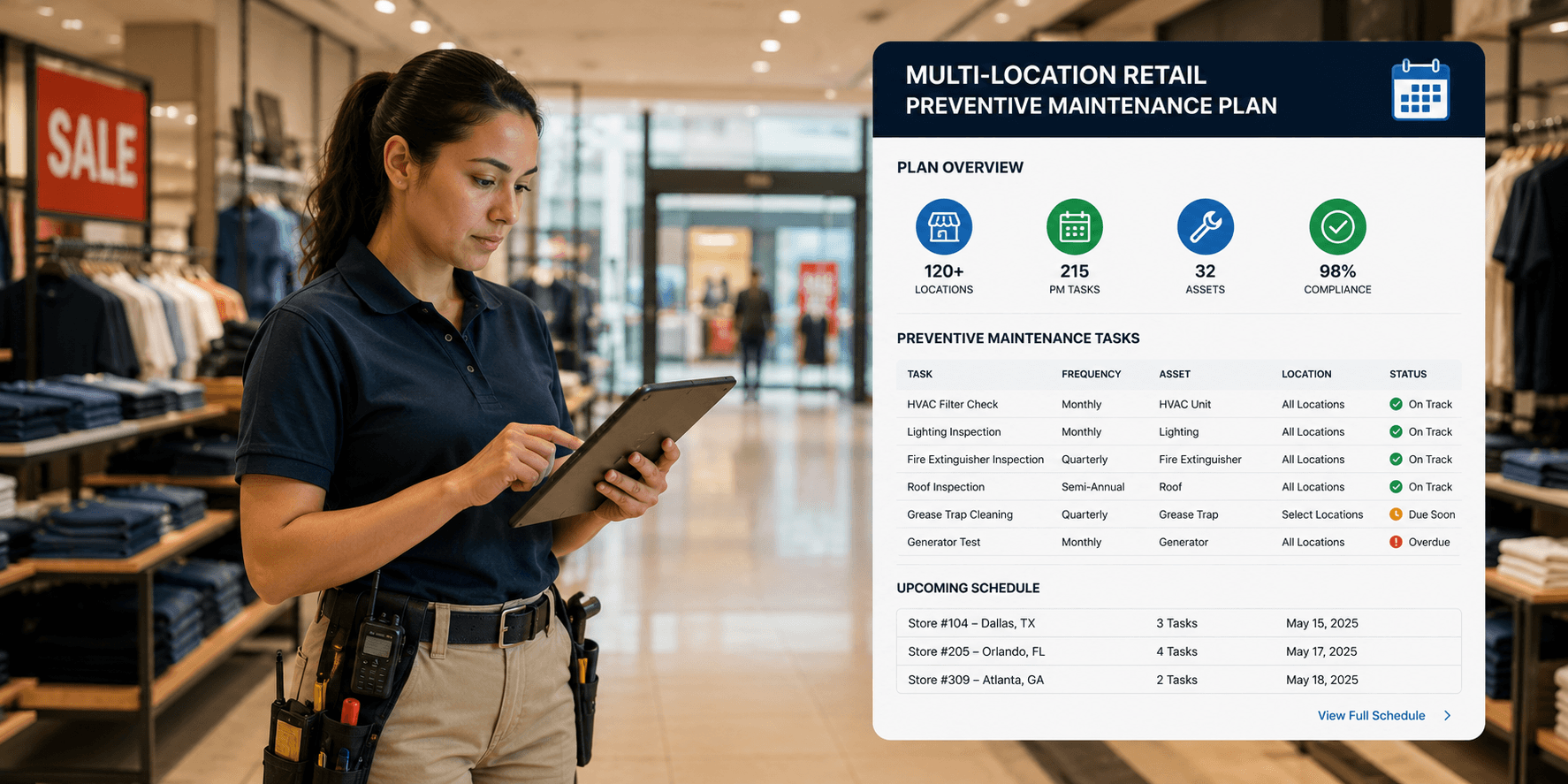
Retail brands bleed billions of dollars every year when equipment breaks unexpectedly and stores scramble for emergency repairs. This guide outlines the precise steps to build a preventive maintenance plan tailored for retail chains. Moving away from a chaotic break-fix model is necessary for long-term operational success.
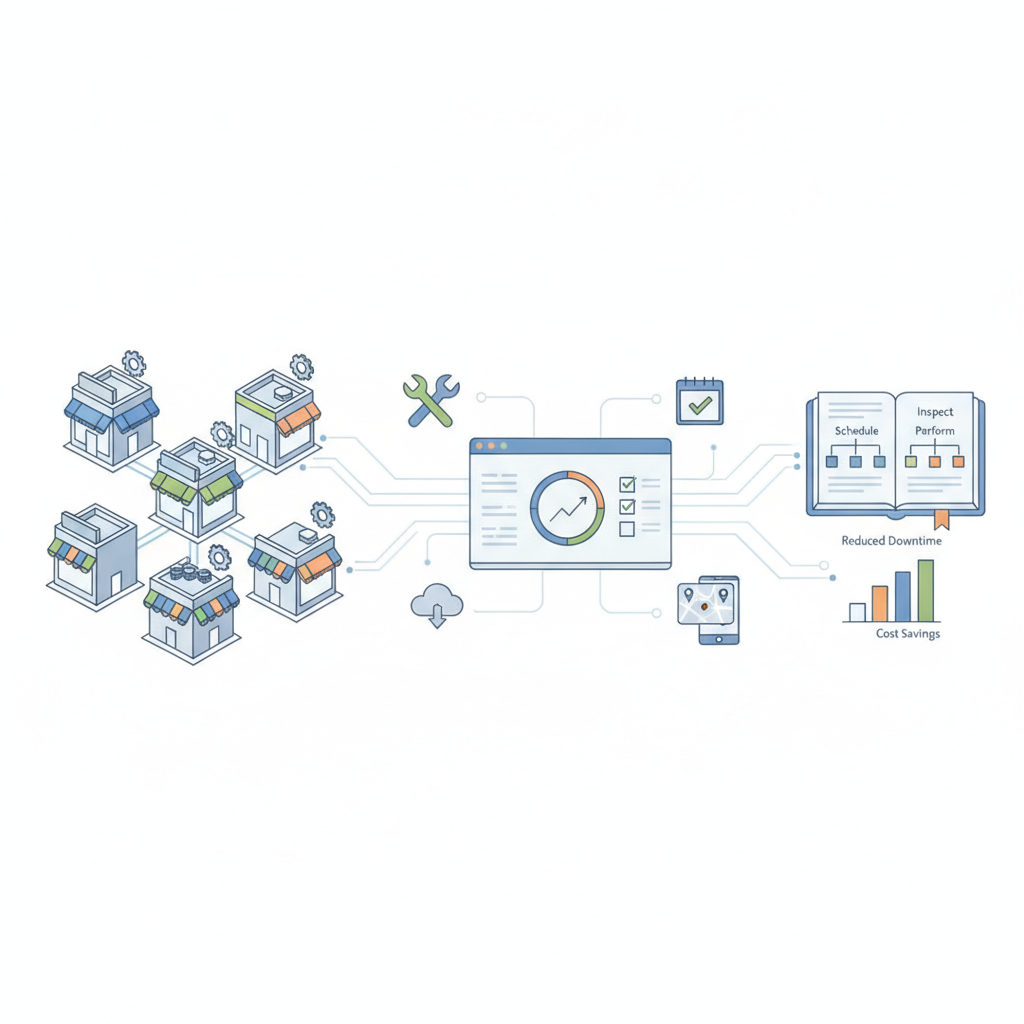
Running multiple locations smoothly demands a deliberate approach to keep brand standards uniform. Launching a durable preventive maintenance plan minimizes business interruptions and shields physical assets across every commercial property.
Cataloging Retail Assets Across All Locations
You cannot care for what you do not track. Every physical asset, from massive HVAC setups in shopping malls to simple automatic entry doors, must sit in a single master database. This accurate inventory forms the basis of any preventive maintenance plan, preventing missed service windows.
Sticking QR codes on machines lets floor staff report issues without guesswork. Technicians scan these tags to pull up service histories instantly. This level of organization cuts out confusion when you send external technicians to a site.
-
Manufacturer name, model details, and unique serial numbers
-
Exact location within the specific store layout
-
Warranty expiration dates alongside previous repair logs
Designing a Localized Maintenance Schedule
Foot traffic shifts with the seasons, meaning loud or intrusive upkeep must happen when shoppers are not around. A smart, forward-looking schedule pushes disruptive work to overnight shifts or quiet weekdays. This timing keeps sales floors clear and protects the buyer journey.
HVAC systems need fresh filters every quarter, while electrical panels require yearly thermal imaging scans. Setting these fixed intervals keeps the brand compliant with local safety codes and manufacturer warranties. This structured preventive maintenance plan prevents minor mechanical hiccups from turning into budget-shattering emergencies.
|
Asset Type |
Upkeep Task |
Scheduled Frequency |
|---|---|---|
|
Climate Control (HVAC) |
Filter swaps and system calibration |
Quarterly |
|
Power Panels |
Heat-signature scans and testing |
Annually |
|
Automatic Entryways |
Sensor checks and alignment |
Twice a year |
Core Elements of a Forward-Looking Upkeep Program
Retailers with dozens of sites lean heavily on external contractors for specialized fixes. When service quality varies by region, you get messy stores and ballooning costs. To keep standards high everywhere, the program must lay down strict expectations for every vendor.
Vendor Performance Metrics
Setting clear service expectations ensures external technicians hit your quality benchmarks. Tracking simple numbers like speed of reply and first-visit resolution rates keeps contractors accountable.
Uniform Digital Work Orders
Using uniform digital task sheets forces contractors to follow brand guidelines to the letter. Technicians must upload before-and-after photos before anyone approves their invoices. This simple layer of accountability keeps store quality high, no matter how far a storefront is from headquarters.
-
Detailed cleaning and testing lists built from manufacturer guidelines
-
Required photo proof of the hardware before and after the job
-
Pre-authorized spending caps for small parts to speed up basic fixes
Integrating Smart Technology and Software Platforms
Paper checklists and isolated spreadsheets break down when managing dozens of storefronts. Modern facilities management relies on Computerized Maintenance Management Systems (CMMS) to send out tasks automatically. This digital shift ensures no vital repair job gets forgotten.
CMMS Automation
A central CMMS platform dispatches tasks automatically based on calendar dates. This automated setup reduces human scheduling mistakes and matches your broader property roadmap.
Sensors and Real-Time Alerts
This software watches how machines run and alerts managers before a major breakdown happens. Putting small sensors on vital grocery coolers flags temperature spikes early to save thousands in ruined food. Adopting smart tools lifts a massive paperwork load off the shoulders of regional managers.
When setting up a preventive maintenance plan, linking your CMMS software keeps dispatching, invoicing, and scorecards in one clean dashboard. This operational clarity helps corporate teams make smart choices about where to spend capital. Clean data quickly highlights which specific stores are draining your repair budgets.
Financial Perks of Scheduled Store Care
Moving from panic-induced fixes to planned upkeep reduces emergency repair costs by 30 to 50 percent. Holiday and weekend service calls charge premium rates that swallow maintenance budgets whole. Establishing a preventive maintenance plan allows teams to bundle jobs and negotiate better bulk rates with preferred contractors.
Well-kept systems draw far less power, dragging down utility bills across your entire real estate portfolio. Tuned thermostats and clean coils keep energy costs steady and predictable. These small, steady savings build up to improve the net profit of every single storefront.
-
Longer working life for costly climate control and cooling units
-
Lower electric bills because machinery runs cleanly and efficiently
-
Cheaper insurance rates when you remove safety hazards from the floor
Overcoming Obstacles to Adoption
Moving to a scheduled calendar requires patient guidance across every level of the company. Store managers frequently push back on downtime because they worry about losing daily sales. Getting past this barrier means showing them how early care prevents multi-day emergency shutdowns.
Regional directors need to see that brief, planned closures shield long-term revenue. Teams cooperate much better when head office shares schedules weeks ahead of time. This advance notice lets store leads adjust staff shifts and stock deliveries smoothly.
Running Your Multi-Site Upkeep Plan
Keeping retail spaces looking uniform demands constant attention and structured habits. Developing a comprehensive preventive maintenance plan is the most effective way to erase operational surprises and guard profits. Clean, working stores naturally build shopper trust and protect your brand name over time.
Start by tracking your physical gear and choosing a central CMMS platform to handle operations. Build open lines of communication with local store managers and your external vendor network. A planned approach to store care shifts facility management from a pure expense into a genuine competitive edge.