TL;DR
Facility operations software is most useful when it connects work orders, vendors, assets, budgets, and reporting in one place. Lean teams should prioritize mobile work execution, multi-site visibility, vendor accountability, and clean implementation over long feature lists.
Facility operations software has moved from a nice-to-have system into the control room for uptime, cost control, and vendor performance. SERP research for this topic found 121 competing results, with major pages from Accruent, Gartner Peer Insights, and FMX focused on broad facility management software. A stronger 2026 buying lens is narrower: lean teams need one operating layer that makes daily work visible, assignable, measurable, and easier to improve. For teams evaluating a modern platform, Leansite is built around that practical operating need.
Table of Contents
What is facility operations software?
Facility operations software is a digital system that centralizes maintenance work, service requests, vendors, assets, preventive schedules, budgets, and reports so facilities teams can run buildings with fewer blind spots. It usually overlaps with facility management software, CMMS tools, work order systems, and vendor management platforms.
Facility operations software: a shared platform for planning, assigning, tracking, and reporting the work needed to keep buildings, sites, and equipment functional.
Wikipedia describes facility management as coordinated management of buildings, sites, workplaces, and support services needed to keep them functional, safe, and effective for occupants, according to Wikipedia's facility management overview. Wikipedia also defines energy and facility management software as an enterprise-wide platform for building-related technical data that grew from EMS, CAFM, and EAS systems, as summarized on Wikipedia.
Modern tools are not just ticket trackers. They connect daily maintenance activity to asset history, service quality, spend, compliance, and leadership reporting.
Key takeaway: The best system does not replace operational judgment; it gives facilities leaders cleaner data for faster decisions.
What should the platform centralize?
A useful platform should centralize the five operating records that usually get scattered across email, spreadsheets, texts, invoices, and vendor portals: work orders, assets, vendors, budgets, and reporting.
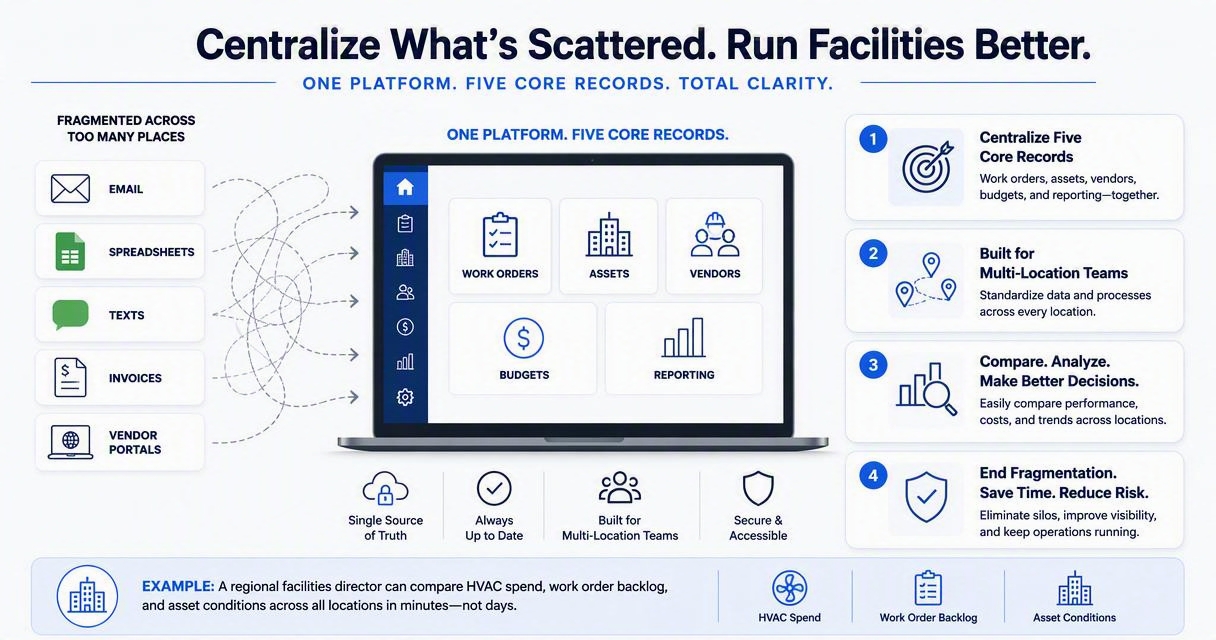
For multi-location teams, fragmentation is the main enemy. A regional facilities director may need to compare HVAC issues across restaurants, campuses, clinics, or retail sites without logging into separate tools. Related workflows are covered in Leansite's guide to multi-location facilities management software.
Core records to keep in one system
|
Operating area |
What the software should track |
Why it matters |
|---|---|---|
|
Work orders |
Requests, priority, assignments, status, photos, notes |
Shows what is open, late, repeated, or resolved |
|
Assets |
Equipment records, locations, warranties, service history |
Supports preventive maintenance and replacement planning |
|
Vendors |
Dispatches, SLAs, quotes, invoices, certificates |
Improves accountability and payment speed |
|
Budgets |
Planned spend, actual spend, category codes, site totals |
Gives owners clearer operating cost visibility |
|
Reporting |
Dashboards, trends, aging work, recurring issues |
Helps leaders spot risk before it becomes downtime |
Strong systems also support mobile field updates. A technician should be able to open a job, add photos, log time, update status, and close the task from the field. Campus teams often care most about this daily execution layer, which is why work-order-specific buying advice matters in guides such as best work order software for campus facilities in 2026.
How should buyers evaluate facility operations software in 2026?
Buyers should evaluate facility operations software by testing how well it handles real work, not by counting the longest feature list. The best short list comes from live workflows: emergency requests, preventive maintenance, vendor dispatch, invoice approval, asset lookup, and executive reporting.
"The first rule of any technology used in a business is that automation applied to an efficient operation will magnify the efficiency.", Bill Gates, Goodreads excerpt from The Road Ahead
A 2026 review should include operations, finance, field staff, and vendor users. Gartner Peer Insights lists facility management software products such as FMX, Binocs, and Corrigo, which shows how crowded the category has become. That makes fit more important than brand recognition.
Seven-step evaluation checklist
-
Map the top 10 recurring maintenance workflows.
-
Score each platform on those workflows in a live demo.
-
Test mobile job updates with photos, notes, and status changes.
-
Review vendor dispatch, quote approval, invoice, and SLA tracking.
-
Check asset history, preventive schedules, and recurring failure reports.
-
Confirm budget views by site, trade, vendor, and asset class.
-
Ask how data migration, training, and adoption will be handled.
AI is also becoming part of the buying conversation. The useful question is not whether a product says "AI," but whether it reduces administrative work, surfaces patterns, and helps teams act sooner. For deeper context, see Leansite's guide to AI facility management software.
Helpful buyer overview video
Software Connect's overview is useful for comparing the general category before narrowing the decision to operational needs. Vendor videos should support a hands-on evaluation, not replace one.
What implementation mistakes slow adoption?
Implementation fails when teams digitize messy habits instead of simplifying the operating model first. A new tool cannot fix unclear priorities, vague ownership, weak asset data, or vendor processes that were never defined.
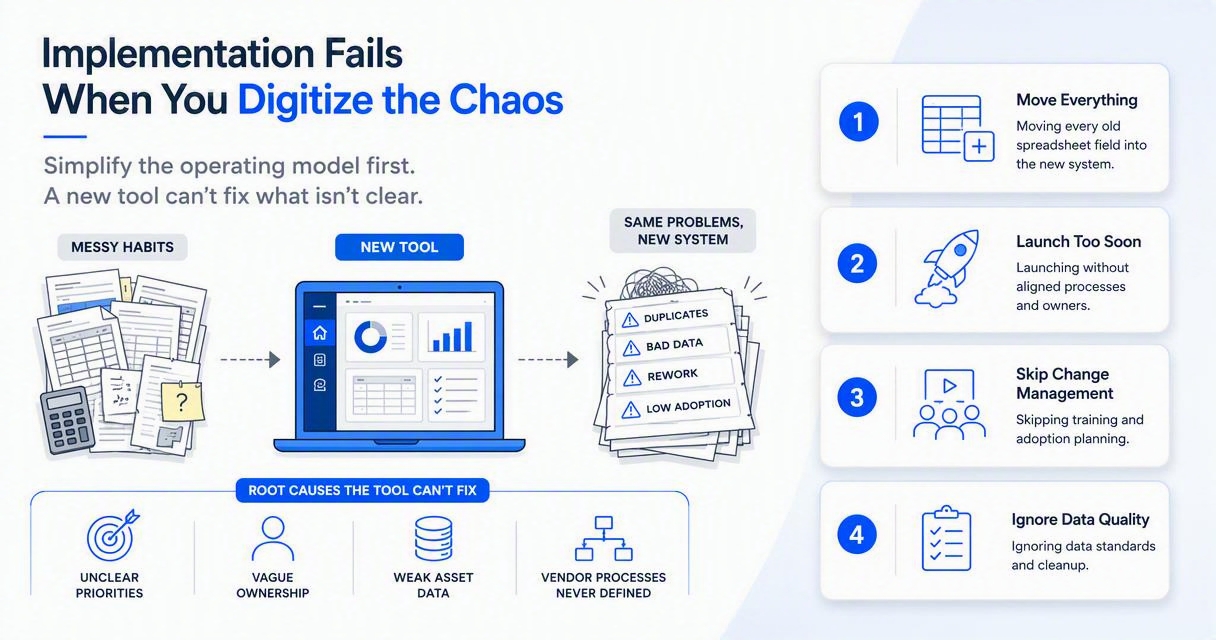
Common mistakes include:
-
Moving every old spreadsheet field into the new system.
-
Launching without clean site, asset, and vendor naming rules.
-
Treating preventive maintenance as a future phase.
-
Giving technicians too many required fields on mobile jobs.
-
Skipping finance workflows for quotes, invoices, and budgets.
-
Letting each location invent its own statuses and categories.
A better rollout starts with one standard workflow for request intake, triage, assignment, completion, and reporting. Multi-site organizations may also need rules for regional approvals, brand standards, and trade-specific vendor coverage. Those themes appear often in practical buying guides such as best multi-site maintenance software in 2026.
Implementation rule: Standardize the workflow before automating it, then improve the workflow after real usage data appears.
Training should be role-based. Technicians need fast mobile habits. Vendors need clear dispatch and documentation expectations. Executives need dashboards that show spend, aging work, repeat issues, and asset risk without asking for manual reports.
FAQ
What is the difference between facility operations software and a CMMS?
A CMMS usually focuses on maintenance management, including work orders, preventive maintenance, assets, and technician activity. Facility operations software is broader because it can include vendors, budgets, multi-site reporting, service requests, and executive visibility. Many teams still use both terms loosely, so the feature fit matters more than the label.
Which features matter most for lean facilities teams?
Lean teams should prioritize mobile work orders, preventive maintenance, vendor dispatch, asset history, budget tracking, and simple dashboards. Fancy features matter less if the core workflow is slow. The platform should reduce status-chasing, duplicate entry, and manual reporting across sites.
How does AI fit into facilities operations?
AI fits best when it helps teams summarize work, detect recurring issues, suggest next actions, or answer questions from facility data. The Leansite platform includes Vera, an AI assistant built for facilities workflows. More detail is available in Leansite's Vera overview.
What should multi-location operators look for first?
Multi-location operators should look for site-level standards, regional dashboards, vendor coverage, budget rollups, and comparable status categories. Restaurants, retail locations, campuses, and healthcare sites need local execution with portfolio visibility. Restaurant-specific workflows are covered in Leansite's 2026 restaurant chains guide.
Conclusion
The right facility operations software should make daily work easier while giving leadership clearer control over cost, uptime, assets, and vendors. A practical buying process starts with real workflows, not feature checklists: map the work, test the mobile experience, verify reporting, and confirm vendor and budget controls. For teams ready to compare a lean, operations-focused platform, visit getleansite.com and review how Leansite supports work orders, vendors, assets, budgets, and reporting in one connected system.