TL;DR
Organize commercial building maintenance by system and daily, weekly, monthly, and seasonal schedules. Assign each task an owner, acceptance criteria, and completion evidence, while following manufacturer instructions and local inspection requirements.
A useful maintenance checklist turns inspections into accountable work. A facility maintenance checklist for commercial buildings should identify what needs attention, when it should happen, and how completion gets verified. For facility managers and property owners, that creates a shared view of building condition. Leansite is a relevant option to consider when moving that process into a coordinated digital workflow.
Table of Contents
What is a commercial building maintenance checklist?
A commercial building maintenance checklist is a scheduled set of inspections and service tasks covering building systems, safety, appearance, and records. It identifies responsible staff or vendors and defines acceptable results. Its purpose is to support reliable operation through repeatable preventive work, rather than relying only on repairs after equipment fails.
Preventive maintenance: Planned inspections and servicing intended to keep assets functioning.
Corrective maintenance: Work that fixes a fault and restores equipment or infrastructure to working condition.
Predictive maintenance: Maintenance informed by condition data, such as vibration, temperature, or operating trends.
A checked box proves little without an asset reference, a recorded result, and a responsible person.
A checklist supports maintenance planning; it doesn't replace manufacturer instructions, specialist assessments, or legally required inspections.
Maintenance checklist by system and cadence
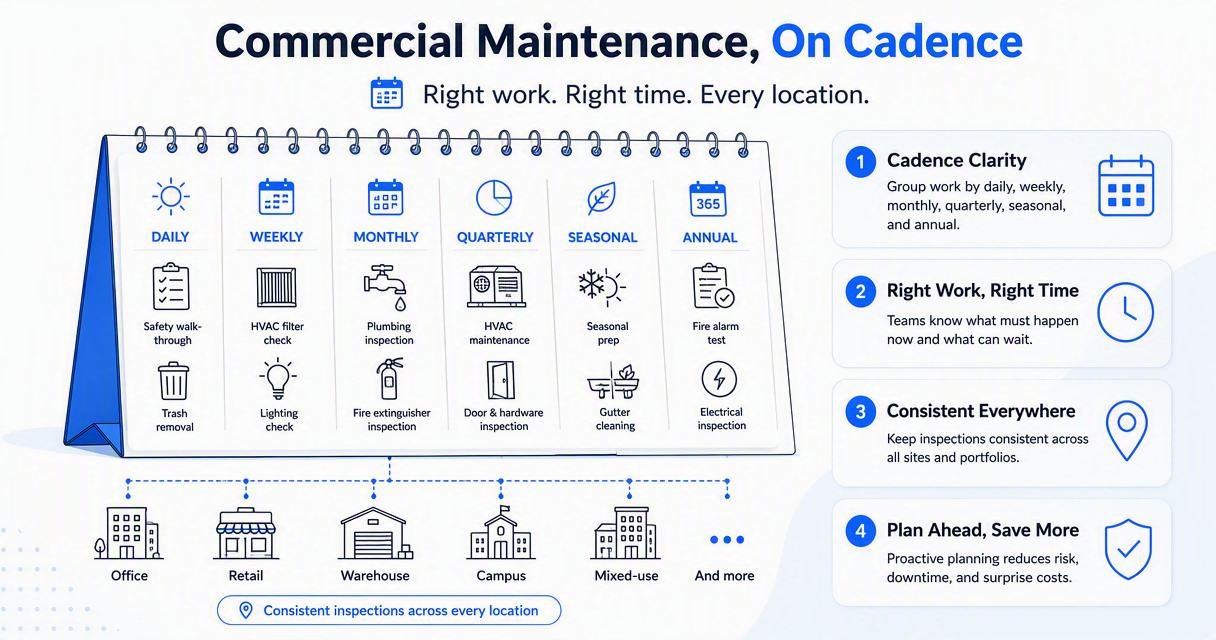
Commercial building maintenance should combine routine walk-throughs with scheduled servicing for each major system. The following checklist provides a starting schedule, not universal compliance intervals. Asset manuals, occupancy, operating hours, climate, and local requirements determine the final frequency.
Daily, weekly, and monthly inspection tasks
| Building system | Daily or weekly checks | Monthly checks or review |
|---|---|---|
| HVAC | Check comfort complaints, unusual noise, visible leaks, and obstructed vents. | Inspect filters and accessible condensate drains; review operating schedules. |
| Plumbing | Look for leaks; check toilets, sinks, and visible drainage issues. | Inspect accessible pipes, shutoff labels, and water-heater surroundings. |
| Electrical | Observe damaged cords, flickering lights, and obstructed panel access. | Inspect accessible fixtures and panel exteriors; route defects to qualified electricians. |
| Exterior | Check entrances, walkways, drainage paths, and visible damage. | Inspect roof areas safely, gutters, sealants, and parking surfaces. |
| Safety | Keep exits clear; check visible damage to safety equipment. | Review inspection due dates and arrange required checks with qualified providers. |
| Common areas | Check spills, cleaning needs, lighting, doors, and trip hazards. | Inspect hinges, locks, signs, flooring, and accessible finishes. |
| Documentation | Record findings, work completed, and follow-up tasks. | Review overdue work, vendor reports, costs, and repeat faults. |
Filter replacement depends on condition and manufacturer guidance, not a blanket monthly rule. Roof access, energized electrical work, and specialist safety testing require appropriate training and procedures.
Seasonal and annual service planning
- Before cooling season: Schedule HVAC servicing, inspect condensate handling, and confirm cooling controls.
- Before heating season: Service heating equipment and prepare exposed plumbing for freezing conditions where relevant.
- Before severe weather: Inspect drainage, roof condition, exterior attachments, and emergency supplies.
- Annual planning cycle: Review asset condition, warranties, service contracts, replacement priorities, and maintenance budgets.
- Required inspection dates: Track fire protection, elevators, backflow devices, and other regulated systems separately, using applicable requirements.
High-use buildings may need more frequent checks. Portfolio teams should keep a shared baseline while allowing site-specific tasks for different equipment and operating conditions.
How can checklist items become recurring tasks?
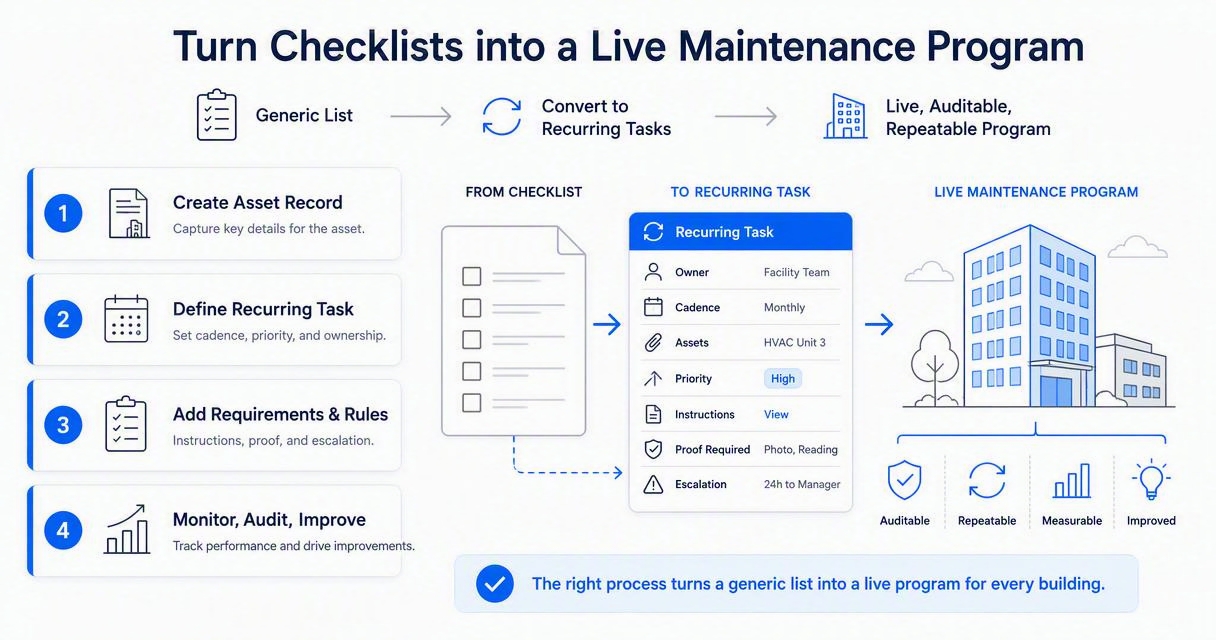
- Inventory assets and assign unique identifiers.
- Set task frequencies from manuals, operating conditions, and applicable requirements.
- Assign a named owner and backup.
- Write measurable inspection steps and acceptance criteria.
- Require evidence, such as readings, photos, or service reports.
- Create follow-up work orders for findings and verify completion.
A task template that produces useful evidence
A practical task reads: Inspect AHU-03's filter monthly; record condition and the differential-pressure reading where a gauge is fitted; compare results with manufacturer guidance; replace when required; attach a photo.
The task record should include:
- Location and asset: Building, floor, room, and equipment ID.
- Accountability: Assigned technician or vendor, due date, and reviewer.
- Result: Pass, attention needed, or not completed, with a reason.
- Follow-up: Related work order, priority, and target date.
Use separate records for inspection and repair so a completed inspection doesn't imply a resolved defect. For assets with useful condition data, predictive maintenance planning can supplement fixed schedules.
Completion records and portfolio visibility
Completion records connect maintenance activity with asset condition, vendor accountability, and operating costs. A shared record should let managers trace a task from its scheduled date through inspection, follow-up work, and final approval.
Records that support owner and vendor reviews
Track completed and overdue tasks by location, repeat work by asset, labor and material costs, and vendor response dates. Link invoices to approved work and keep service reports alongside the relevant asset history.
Reliable reporting starts with consistent asset names and task statuses across every property.
How Leansite fits the workflow
Leansite belongs on the shortlist for teams evaluating a shared facility maintenance workflow. A practical demonstration should follow one scheduled inspection through assignment, recorded evidence, vendor coordination, and management review.
The Leansite and Accruent Maintenance Connection comparison provides a starting point for platform evaluation. Selection should reflect portfolio size, staff responsibilities, and the records needed for clear oversight.
Conclusion
Start with one property's asset inventory, adapt the facility maintenance checklist for commercial buildings to its service requirements, and assign the first recurring tasks. After the initial cycle, review completion evidence and refine the schedule. For teams ready to evaluate a shared workflow, arrange a Leansite demonstration through getleansite.com using a real inspection task.