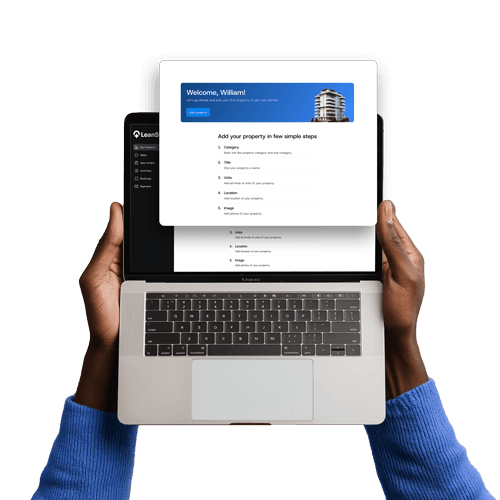
A CMMS (computerized maintenance management system) manages the day-to-day work of keeping equipment running: work orders, preventive maintenance schedules, technician assignments, and parts inventory. An EAM (enterprise asset management) system manages an asset's entire lifecycle, from acquisition and procurement through operation, maintenance, financial depreciation, and eventual disposal. A CMMS can be thought of as one component within a full EAM system; most EAM platforms include CMMS-style maintenance functionality, but not every CMMS includes EAM's broader lifecycle, financial, and compliance capabilities. The right choice generally comes down to scope: teams focused on reducing downtime and keeping maintenance organized tend to do well with a CMMS, while organizations that need to track total cost of ownership, depreciation, and lifecycle planning across a large, complex asset base tend to need EAM's broader feature set.
Where these terms come from
CMMS software has its origins in the 1960s, and by the 1980s, 1990s, and 2000s, it had expanded well beyond a basic maintenance log to include work order management, project management, and spare parts purchasing as computing and networking became cheaper and more widely available. EAM emerged later, in the 1990s, evolving in part out of enterprise resource planning (ERP) software as organizations in asset-heavy sectors like utilities, transportation, and manufacturing needed tools that could support long-term financial planning, compliance, and lifecycle decisions on top of routine maintenance tracking. That difference in origin still shows up in how each category is built today: CMMS platforms tend to be built from the maintenance floor up, prioritizing speed and simplicity for technicians, while EAM platforms tend to be built from a more centralized, financial and compliance-oriented perspective.
What a CMMS actually covers
A CMMS centralizes maintenance information into a searchable database and typically includes:
-
Work order management, creating, assigning, tracking, and closing maintenance tasks.
-
Preventive maintenance scheduling, generating recurring maintenance tasks based on time, usage, or condition to reduce unplanned failures.
-
Asset and equipment records, tracking basic information, service history, and documentation for each piece of equipment.
-
Parts and inventory tracking, so technicians can see what materials are on hand before starting a job.
-
Mobile access, letting technicians update work orders and log completed tasks from the field rather than returning to a desktop.
CMMS platforms are generally faster to deploy and easier for frontline staff to learn than a full EAM system, which is part of why they remain the more common starting point for organizations that are digitizing maintenance for the first time.
What an EAM adds on top
An EAM system includes the same core maintenance functionality as a CMMS, but extends it across the asset's full lifecycle:
-
Procurement and acquisition tracking, managing an asset from the initial purchase decision rather than starting once it is already in service.
-
Financial and depreciation tracking, connecting an asset's maintenance costs to its book value, depreciation schedule, and total cost of ownership over time.
-
Risk and compliance management, supporting regulatory and audit requirements tied to asset condition and lifecycle documentation.
-
Multi-location, multi-department asset visibility, supporting organizations with assets spread across many sites, business units, or entities under one centralized system.
-
Disposal and decommissioning workflows, formally tracking an asset out of service rather than simply removing it from an active list.
Because EAM includes financial and lifecycle planning features, it tends to appeal more to larger organizations with complex, high-value asset portfolios where procurement decisions, depreciation schedules, and long-term capital planning genuinely matter to the business, not just to the maintenance department.
Why the market size numbers vary so widely
The enterprise asset management software market is large and growing, but published estimates vary considerably depending on the analyst and what is counted as "EAM" versus adjacent categories. Global Market Insights sizes the market at $6.6 billion in 2026, projected to reach $17.2 billion by 2035 at an 11.3% compound annual growth rate, and notes that the top five vendors by market share (including IFS, IBM, and Oracle) collectively held about 34% of the market in 2025. MarketsandMarkets projects a more conservative path, from $5.87 billion in 2025 to $9.02 billion by 2030 at a 9.0% CAGR, while Grand View Research puts the market at $7.65 billion in 2024, growing to $19.68 billion by 2030 at a considerably steeper 17.2% CAGR.
That roughly threefold spread in growth-rate assumptions across reputable analysts is itself a useful data point: it reflects genuine disagreement about how quickly EAM adoption is accelerating, and how cleanly EAM can be separated from adjacent CMMS and ERP spending in survey data, rather than a single settled figure. By comparison, the CMMS market specifically, a narrower category focused on maintenance operations rather than full lifecycle and financial management, is generally sized smaller, in the range of roughly $1.6 billion to $2.4 billion in 2026 depending on the source, underscoring that EAM is genuinely the broader, and currently the faster-growing, of the two categories.
How to choose between them
A few practical questions tend to clarify which category actually fits:
-
Is your primary goal reducing downtime and organizing maintenance work, or managing total cost of ownership across an asset's full life? The former points toward a CMMS, the latter toward EAM.
-
Do you need to track depreciation, procurement, and disposal, or just maintenance history? If financial and lifecycle accounting genuinely matters to how your organization makes asset decisions, EAM's broader scope is built for that; if not, it is likely unnecessary overhead.
-
How complex and how large is your asset portfolio? Large enterprises with complex, high-value asset bases across many locations tend to benefit from EAM's broader capabilities, while smaller or more maintenance-focused teams often find a CMMS sufficient without the added complexity.
-
Who needs to use the system day to day? CMMS platforms are generally faster to deploy and easier for frontline technicians to adopt; EAM systems, with their broader scope spanning finance, procurement, and compliance, often involve a steeper learning curve and more cross-departmental coordination to implement well.
Where this leaves a multi-location facilities team
Neither category was originally built with a mid-size, multi-location facilities organization, a retail chain, restaurant group, or property portfolio, as its primary design target. CMMS platforms were generally built for a single site or a straightforward multi-site rollout focused on maintenance tasks; EAM platforms were generally built for large, asset-intensive enterprises (manufacturing, utilities, transportation) where financial lifecycle accounting across a large capital asset base is the central concern.
A multi-location facilities organization typically does not need full EAM-style depreciation and procurement accounting for its HVAC units and refrigeration equipment, but it does need something a basic single-site CMMS was not built around: vendor and contractor management with budget controls across many sites, compliance and audit trail tracking specific to its industry, and portfolio-wide visibility into maintenance performance across every location at once. That gap, not quite basic CMMS, not quite full enterprise EAM, is where a platform purpose-built for multi-location facilities operations tends to fit.
Full disclosure, since this article is published by LeanSite: LeanSite is an AI-powered facilities management platform built for multi-location and mid-size organizations, and it sits in that specific space between a basic CMMS and a full enterprise EAM. Vendor management, budget and not-to-exceed tracking, and multi-site rollup reporting are core to the platform rather than either a CMMS add-on or a full EAM's financial lifecycle accounting layer. That is not a claim that LeanSite replaces EAM for an organization that genuinely needs deep depreciation and procurement accounting across a large capital asset base, or that it is necessary for a single site with straightforward maintenance needs; it is a specific fit for the multi-location middle ground described above.
If you are trying to figure out whether your organization's actual needs point toward a CMMS, an EAM, or something built specifically for multi-site facilities operations, that's usually a short conversation and there's no pressure either way.
Frequently asked questions
Is a CMMS part of an EAM system, or are they separate? A CMMS can be considered one component within a broader EAM system. Most full EAM platforms include CMMS-style maintenance functionality, but a standalone CMMS does not typically include EAM's broader financial, procurement, and lifecycle features.
Which is cheaper, CMMS or EAM? CMMS platforms are generally less expensive and faster to deploy than full EAM systems, since they cover a narrower scope of functionality focused specifically on maintenance operations rather than an asset's entire financial lifecycle.
Does a small business need EAM, or is CMMS enough? Most smaller organizations and single-site or straightforward multi-site operations are well served by a CMMS. EAM's added complexity, procurement tracking, depreciation accounting, disposal workflows, tends to be worth the overhead mainly for larger organizations with complex, high-value asset portfolios where that level of financial and lifecycle detail genuinely drives business decisions.
Do CMMS and EAM systems integrate with other business software? Both commonly integrate with enterprise resource planning (ERP) systems and other business software. EAM systems are somewhat more likely to be deployed as part of a broader ERP integration given their overlapping focus on financial and operational data, while CMMS platforms are more often deployed as a standalone tool, though both types can be integrated into an existing software environment.
Is EAM only relevant to manufacturing companies? No. While manufacturing represents a substantial share of EAM adoption, healthcare, utilities, transportation, and other asset-intensive or multi-location sectors also use EAM systems, particularly where lifecycle cost tracking and compliance requirements are significant.
What should a multi-location facilities organization consider that a standard CMMS-versus-EAM comparison doesn't usually address? Whether the software supports vendor and contractor management with budget controls, compliance and audit tracking, and portfolio-wide reporting across every site at once. A basic CMMS is often not built for coordinating vendors and budgets across many locations, and a full EAM's depreciation and procurement accounting is often more than a facilities-focused organization actually needs.
Written by Pelumi Akinwande, Operations Content Lead at LeanSite, who works directly with multi-site facilities and property operations teams evaluating work order software. Connect on LinkedIn.