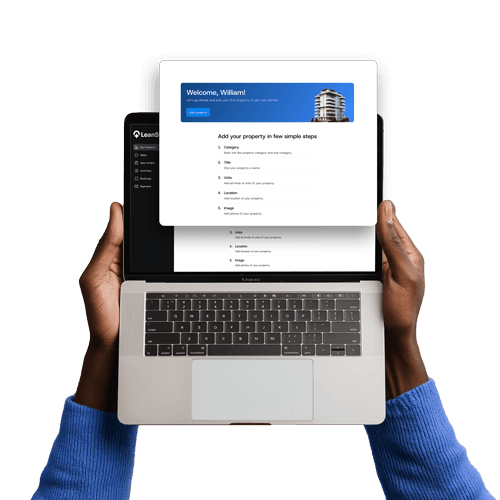
Maintenance request software is the layer of a maintenance system that captures a problem the moment someone notices it, a leaking faucet, a broken HVAC unit, a malfunctioning piece of equipment, and turns it into a trackable, assigned, time-stamped task. It sits underneath the broader category of CMMS (computerized maintenance management system): a maintenance request app focuses specifically on intake and communication, while a full CMMS goes further into asset records, preventive maintenance schedules, parts inventory, and long-term maintenance history. Most teams evaluating this category are really choosing a full CMMS with strong request-intake capabilities built in, since a request that cannot be linked to an asset's history or converted cleanly into a scheduled work order tends to create the same tracking problems a generic ticketing tool would.
What maintenance request software actually does
At its core, maintenance request software replaces the informal channels most facilities and maintenance teams start with a text message to a supervisor, a sticky note left on a desk, a verbal request passed along in a hallway. Those channels work until volume increases, at which point requests get lost, duplicated, or forgotten. A dedicated system centralizes intake through one or more structured channels:
-
Mobile app submission, so a staff member, technician, or occupant can report an issue from wherever they notice it, with a photo attached.
-
QR code scanning, which links a request directly to a specific asset or location without the requester needing to type in details manually.
-
Kiosk or tablet submission, a fixed device mounted in a lobby, break room, or building entrance, useful in high-traffic buildings or for requesters who do not carry a personal device.
-
Web form submission, for requesters who prefer a browser over a mobile app.
-
Email conversion, where an email sent to a designated address is automatically turned into a tracked request.
The specific mix of channels that matters depends on who is submitting requests. A single-site manufacturing plant with a fixed technician workforce has very different intake needs than a multi-location retail chain fielding requests from store managers, or a property portfolio fielding requests from tenants who may never log into a CMMS at all.
Request versus work order: why the distinction matters
A maintenance request and a work order are not the same thing, and conflating them is one of the more common sources of confusion in this category. A request is the raw report: someone notices a problem and flags it. A work order is what happens after that report is triaged, assigned a priority, routed to the right technician or vendor, and scheduled. Not every request should automatically become a work order; some are duplicates, some are outside the scope of what the maintenance team handles, and some need to be merged with an existing open request for the same issue.
This triage step is also where teams most commonly fail. When responsibility for reviewing incoming requests is shared across an entire team rather than assigned to one person per shift, the practical result is that no one consistently does it, requests sit unreviewed, and response times slip. Systems built around a clear conversion step, request submitted, request triaged and prioritized, request converted to a scheduled work order, tend to hold up better under volume than systems that treat every submission as an immediate task.
Core features to evaluate
Five criteria consistently separate maintenance request software that gets adopted from software that gets ignored in favor of texting a supervisor:
-
Submission speed. If logging a request takes more than about a minute, or requires a desktop login, adoption drops. This is the single most common failure point in this category: the software works fine in a demo and gets bypassed in practice.
-
Multiple submission methods. Mobile app, QR code, web form, and email conversion cover the range of how different requesters, staff, technicians, tenants, guests, actually want to report an issue.
-
Structured, minimal-friction forms. The form should capture the right details automatically, asset, location, urgency, and a photo, without requiring the requester to already understand how the underlying system works.
-
Mobile and offline access for technicians. A technician who cannot update a job status without walking back to a computer will not update it consistently, which erodes the accuracy of the data the whole system depends on.
-
Searchable asset and request history. Past service records tied to a specific asset let a technician, or an AI assistant layered on top of the system, surface relevant troubleshooting context (a previously resolved issue on the same equipment, for example) at the moment a new request comes in, rather than starting from zero each time.
SLA tracking and escalation
A maintenance request system that does not track response time against a target is missing one of its more useful functions. Service level agreement (SLA) targets, configured by priority level, let a team define how quickly a critical request (a safety hazard, a total equipment failure) should be acknowledged versus a lower-priority one (a cosmetic repair that can wait for the next scheduled maintenance round). When an SLA window approaches, automated alerts notify the assigned technician and their supervisor; when it is breached, escalation alerts move up to the next management level. SLA compliance rate, the percentage of requests responded to within the target window, functions as a reportable KPI that gives a maintenance leader visibility into whether the team is keeping pace with demand, rather than relying on anecdotal impressions of whether things feel behind.
Published benchmarks give a concrete sense of what "on time" actually means in practice. Buildium's maintenance metrics guidance treats a first response under 4 hours as strong and anything under 24 hours as acceptable, with response times beyond 24 hours putting tenant satisfaction at risk; on full resolution, under 24 hours is the benchmark for emergencies, 1 to 3 days for routine issues, and 4 or more days is flagged as a risk to both satisfaction and the property itself. Property Meld's 2024 benchmarking report, built on a dataset of 8.6 million work orders, found that average response time across its network improved by 6.1 days compared with the prior year, evidence that these numbers move meaningfully year over year as more operators adopt structured tracking rather than staying static regardless of process.
The stakes behind hitting these targets are measurable, not just anecdotal. Research from the MIT Center for Real Estate, based on 104,586 tenant responses across 2,906 office buildings, found that a one-point rise in tenant satisfaction on a five-point scale corresponded to an 8.6% higher chance of lease renewal. Separately, Zillow's 2025 Consumer Housing Trends Report found that 68% of long-tenured renters cite a well-maintained property as a reason they stay. Maintenance responsiveness, in other words, is not a soft operational nicety; it shows up directly in renewal and retention numbers that facilities and property teams are held accountable for.
What the category generally does not address: multi-location coordination
Most maintenance request software, including tools built specifically for this use case, is designed around a single site or a relatively small number of locations reporting into one team. Multi-location and mid-size organizations, retail chains, restaurant groups, property portfolios, multi-site healthcare or education campuses, run into three coordination problems that single-site-oriented tools generally were not built to solve:
-
Routing by site and vendor. A request submitted at one location needs to reach the right technician or the right outside vendor for that specific site, not a generic team inbox that then has to manually redirect it.
-
Portfolio-wide SLA and volume reporting. Tracking response time and request volume for one building is straightforward. Rolling that same visibility up across dozens or hundreds of locations, to spot which sites are falling behind or which categories of requests are spiking, requires reporting built around a portfolio structure from the start.
-
Separating internal and external requesters. A facilities team's own staff, outside vendors and contractors, and tenants or occupants each need different levels of access and different submission experiences, but their requests still need to land in one unified system for tracking and reporting purposes.
An overview of the current landscape
The market this software sits in is sizable and still growing quickly. Estimates vary by analyst and methodology, Future Market Insights sizes the global CMMS market at roughly $2.4 billion in 2026, projected to grow at a 9.3% compound annual rate to reach $5.9 billion by 2036, while the broader facility management software category, which includes CMMS as one component alongside space management, energy management, and lease administration, was estimated by Mordor Intelligence at approximately $2.66 billion in 2025, projected to reach $4.97 billion by 2030 at a 13.3% compound annual growth rate. That growth is a large part of why the vendor field for "maintenance request software" specifically is crowded and inconsistent in quality: a fast-growing, not-yet-consolidated category attracts a wide range of publishers, from established CMMS vendors to general-purpose content marketing sites with no facilities expertise at all.
The maintenance request and CMMS software market includes a wide range of vendors positioned differently by industry and company size. MaintainX, a mobile-first CMMS with in-app messaging and AI-assisted work order creation, reported more than 14,000 customer organizations and over 500,000 frontline users in early 2026, and holds a 4.8 average rating across 993 reviews on Capterra, with a starting price of $25 per month. UpKeep, a broader asset operations platform that also includes safety, fleet, and IoT modules, holds a 4.6 average across 1,320 Capterra reviews with a starting price of $20 per month. eWorkOrders, eMaint, Coast, Makula, and FMX round out a category that spans manufacturing-focused platforms, K-12 and higher education-focused platforms, and general-purpose CMMS tools. No single platform in this landscape is purpose-built primarily around multi-location, portfolio-level request coordination as its core design principle, which is worth factoring into an evaluation if that is the specific problem your organization is trying to solve.
How to choose: a practical checklist
-
Map out who actually submits requests today, internal staff, outside vendors, tenants, or a mix, and confirm the platform supports each group with an appropriately simple submission flow.
-
Time how long it takes to submit a test request end to end. If it takes more than a minute, expect real-world adoption to suffer.
-
Confirm SLA targets can be set by priority level and that escalation is automatic, not dependent on someone remembering to check a dashboard.
-
If you operate more than one location, ask specifically how the platform routes requests to the correct site and vendor, and whether reporting rolls up across the full portfolio or has to be checked location by location.
-
Test the mobile experience offline, not just on a strong office Wi-Fi connection, since field and site conditions rarely match a demo environment.
LeanSite is an AI-powered facilities management platform built for multi-location and mid-size organizations, which puts it closer to the portfolio-coordination problem described above than to the single-site use case most maintenance request tools were originally designed around. Request routing by site and vendor, portfolio-wide SLA reporting, and separating internal, vendor, and tenant-submitted requests within one system are core to the base platform. That is a genuinely different starting point than most of the tools in this category, not a claim that it is the right fit for every team; a single site with straightforward internal requests may not need that layer at all.
If you are mapping out your own requesters and request volume and want a second set of eyes on what to prioritize, that's usually a short conversation and there's no pressure either way.
Frequently asked questions
What is the difference between a maintenance request and a work order? A maintenance request is the raw report of a problem, submitted by whoever notices it. A work order is the triaged, scheduled, assigned job that follows, with a priority level, an owner, and a due date. Not every request becomes a work order; some are duplicates or get merged with an existing open item.
What is the difference between a maintenance request app and a full CMMS? A maintenance request app focuses specifically on capturing and routing requests. A full CMMS (computerized maintenance management system) goes further, adding asset records, preventive maintenance scheduling, parts inventory, and long-term maintenance history connected to each piece of equipment.
How fast should maintenance request submission be? Submission should take under a minute and should not require a desktop login. Slower or more complicated submission flows tend to get bypassed in favor of informal channels like texting a supervisor directly.
What is an SLA in maintenance request software? An SLA (service level agreement) target defines how quickly a request should be acknowledged or resolved based on its priority level. Automated alerts notify the assigned technician as the SLA window approaches, and escalation alerts fire to management if it is breached.
Can maintenance request software handle tenant or guest requests, not just internal staff? Many platforms support this through methods that do not require the requester to have a login or any training, such as a kiosk, QR code, or web form. Whether tenant and guest requests are tracked separately from internal staff requests, and whether that distinction is preserved in reporting, varies significantly by platform.
Is maintenance request software different for multi-location businesses? The core mechanics, submission, triage, conversion to a work order, SLA tracking, are the same regardless of location count. What differs for multi-location organizations is the need for requests to route automatically to the correct site and vendor, and for SLA and volume reporting to roll up across the full portfolio rather than being checked one location at a time, a capability most request-focused tools were not originally built around.
Written by Pelumi Akinwande, Operations Content Lead at LeanSite, who works directly with multi-site facilities and property operations teams evaluating work order software. Connect on LinkedIn.