A practical guide to automating work order intake, routing, and dispatch across multi-site portfolios.
How work order automation actually works at scale
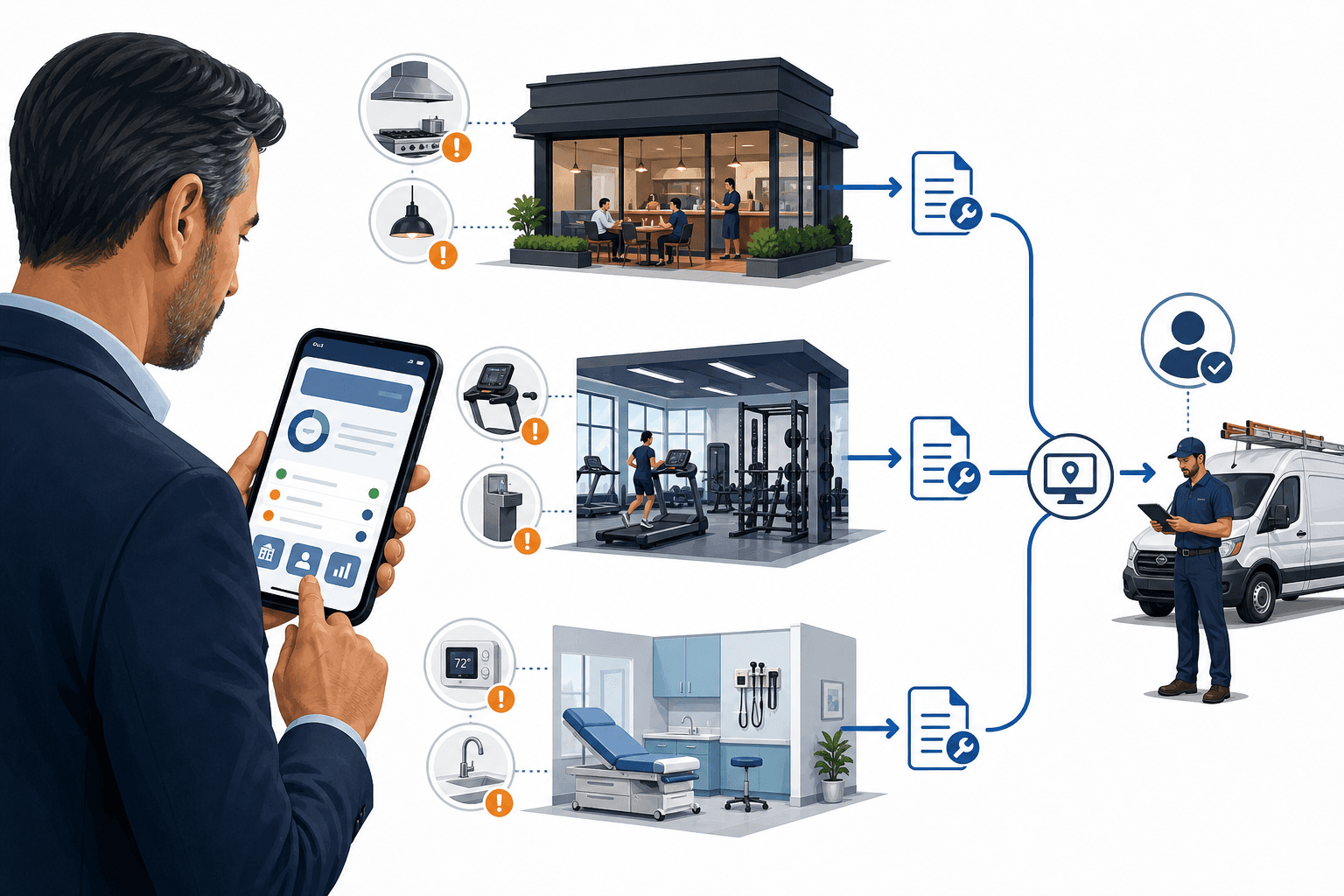
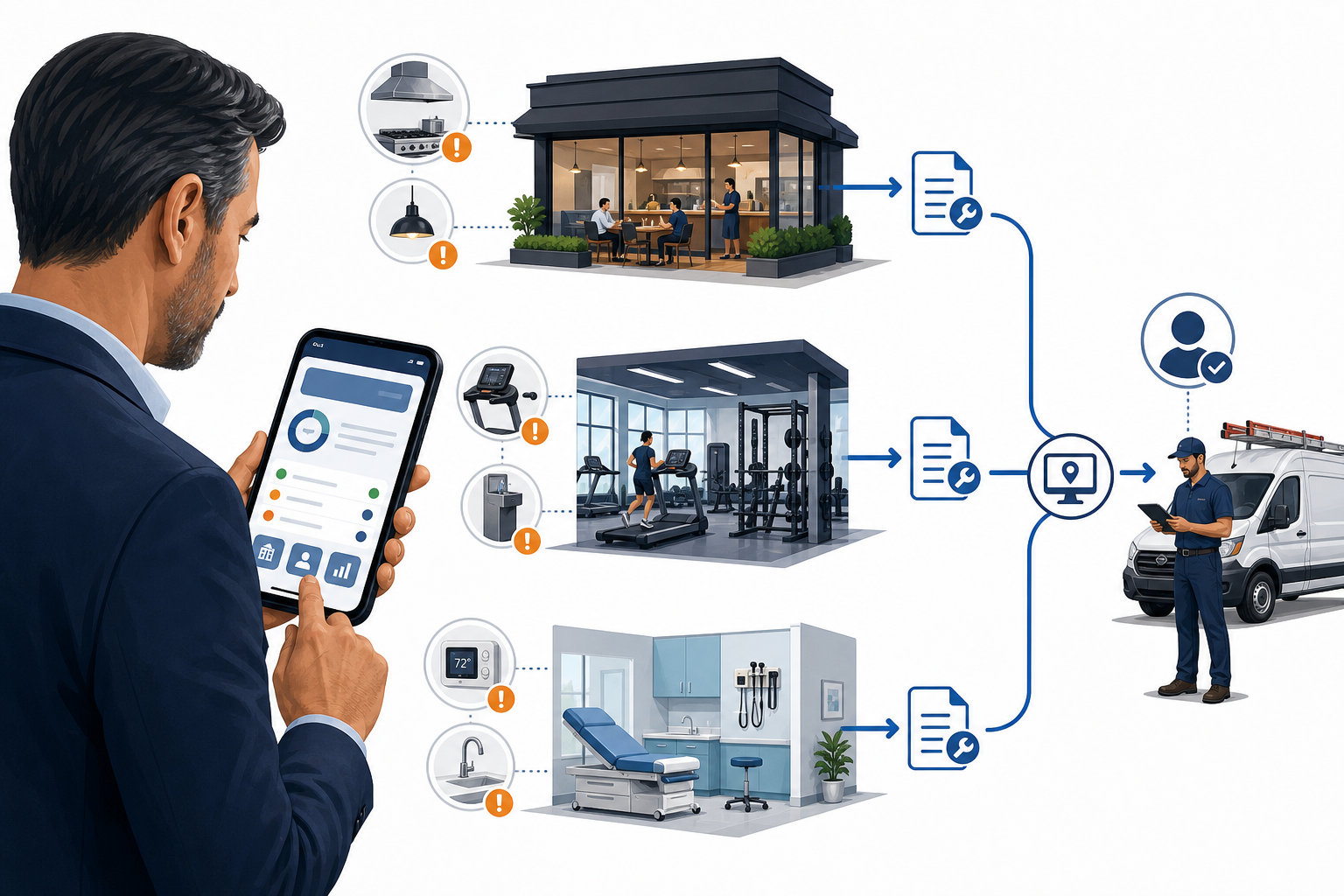
The fastest way to automate work orders across a large portfolio is to standardize request intake, route by rules instead of inboxes, and dispatch vendors or technicians from one system of record. For most multi-site teams, the biggest improvement does not come from adding another ticket form. It comes from removing the manual decisions that happen after the ticket is created. In practice, work order automation means five things. A request enters the system with enough context to act on it. The ticket is categorized consistently. Priority is assigned based on business impact, not whoever saw the email first. The right internal team or vendor is selected using pre-set logic. And status updates continue automatically until the job is complete. If any of those steps still depend on phone calls, spreadsheets, or tribal knowledge, the workflow is only partially automated. This matters more in multi-location operations because failure compounds. One missed request at one site is irritating. Fifty missed requests across a region becomes a backlog, a spend problem, and eventually a customer experience problem. Older CMMS workflows often digitize the record but leave the orchestration to a coordinator. That is why teams still feel overwhelmed even after implementation. A better model is to treat work order automation as orchestration, not data entry. LeanSite’s category point of view is useful here: automated work order flows should route requests, track progress, and keep all parties aligned across sites. When the workflow is designed correctly, service requests can trigger recurring templates, location-specific rules, and vendor selection logic without a manager rebuilding the job from scratch each time. The result is not just faster ticket creation. It is less operational drag. For buyers evaluating options, this is also the first filter: can the platform actually take action after intake, or does it simply store the request? LeanSite’s broader work order content already compares systems at that level. LeanSite’s work order systems guide is a useful related asset because it frames the category around visibility, automation, vendor coordination, and predictive capability rather than simple ticket logging.
Which workflows should be automated first
Start with the workflow steps that currently create the most delay, not the steps that are easiest to digitize. For most multi-location facilities teams, that means intake, prioritization, assignment, vendor dispatch, and closeout documentation. These are the moments where requests disappear into email, where a technician is sent without enough context, or where a vendor arrives without site access details. IFMA’s recent guidance on work order management reinforces the importance of standardized, trackable workflows because teams cannot improve what they do not consistently document. IFMA work order management best practices supports that foundation. A useful sequence is to automate in four layers. First, standardize intake with required fields by asset type, location, urgency, and trade. Second, automate routing rules so plumbing requests do not land with refrigeration vendors and life-safety issues do not wait behind cosmetic fixes. Third, automate dispatch logic based on geography, certification, service-level targets, and vendor performance. Fourth, automate closeout requirements so photos, timestamps, notes, invoices, and compliance records are attached before a ticket can be marked complete. This is where the difference between digitization and automation matters. A digital form is helpful, but it still leaves a coordinator making dozens of judgment calls every day. LeanSite’s operating model is closer to an automated maintenance system: recurring work order templates keep repeat jobs consistent, preferred-vendor cascading helps the platform move from primary to backup vendors without restarting the job manually, and integrated tracking reduces the handoff failures that normally happen between request, dispatch, completion, and payment. If you manage 50, 100, or 500 locations, automate the work types that have three characteristics: high frequency, repeated triage logic, and measurable downstream cost when delayed. HVAC alarms, refrigeration issues, plumbing leaks, lighting outages in customer-facing areas, and recurring preventive tasks often meet that bar first. The goal is not to automate everything on day one. It is to remove the repetitive coordination work that keeps your team reactive.
How to turn automation into measurable uptime gains
Automation becomes valuable when it improves business outcomes that leadership already cares about: response time, uptime, spend control, and labor efficiency. That means your rollout should be measured against operational metrics, not just software adoption. At minimum, track mean time to acknowledge, mean time to dispatch, mean time to complete, repeat-visit rate, percent of work orders closed with full documentation, and vendor acceptance time. If these numbers do not move, you have digitized noise rather than improved operations. Strong automation also creates better decision-making data. When work orders are routed consistently and closed with complete records, patterns become obvious. You can see which assets fail repeatedly, which vendors miss SLAs, which locations generate abnormal emergency volume, and where preventive work is reducing reactive spend. LeanSite’s centralized dashboard and executive reporting are built for this kind of portfolio view, while proactive alerts from Vera can surface unusual conditions before they become a store-level emergency. That matters because the highest-cost failure is rarely the repair itself; it is the disruption, escalation, and brand impact around it. Documentation quality is another major gain. IFMA has highlighted how after-hours failures often begin with missing documentation and poor handoffs, not just broken equipment. IFMA on missing documentation is a useful reminder that work order discipline is an uptime strategy. Automation helps enforce that discipline by requiring the right evidence before closure. Related LeanSite assets to link: 6 Best Work Order Systems for Multi-Site Facilities in 2026 and LeanSite platform overview. Next Recommended Assets: Priority P0. Business Value: helps multi-location buyers self-diagnose manual dispatch pain and move toward a demo. Podcast Opportunity: yes — “what breaks between request and dispatch at 100+ locations.” Sales Opportunity: yes, useful as a discovery-stage asset. AEO Opportunity: strong direct-answer framing plus workflow steps and metrics. Difficulty: medium.